
Hydroxypropyl Methylcellulose (HPMC) is a non-ionic cellulose ether produced by chemical modification of natural plant fibers. In the construction industry, HPMC is widely used as an important functional additive in various dry-mix mortars, putty powders, adhesives, and other products. It significantly improves the water retention, workability, and bond strength of mortars, making it an indispensable admixture in modern dry-mix mortars. This article systematically introduces HPMC from the aspects of its basic properties, synthesis methods, core functions, and specific applications in the construction industry.
HPMC is a mixed ether obtained by substituting hydroxyl groups on the glucose units of the cellulose backbone with methoxy groups (-OCH₃) and hydroxypropoxy groups (-OCH₂CH(OH)CH₃). Its molecular weight generally ranges from tens of thousands to hundreds of thousands. Different grades of HPMC exhibit different properties due to variations in the degree of substitution and molecular weight.
In terms of physical appearance, HPMC is a white or off-white fibrous or granular powder, odorless and tasteless. The key properties that make it valuable in construction applications include:
Cold water solubility: HPMC dissolves in cold water to form a transparent or translucent colloidal solution; it is insoluble in hot water. This property allows it to disperse quickly in dry-mix mortars and rapidly swell and thicken upon water addition.
Thermal gelation: HPMC aqueous solutions undergo reversible gelation when heated to a certain temperature (typically 50–90°C), which has some influence on construction in high-temperature environments.
pH stability: As a non-ionic ether, the viscosity of HPMC in aqueous solution is largely unaffected by pH. It remains stable even in highly alkaline environments such as cement, making it very suitable for cement-based materials.
Surface activity: HPMC possesses certain surface activity, improving the homogeneity and anti-segregation performance of mortars.
Depending on the methoxy and hydroxypropoxy content, HPMC can be divided into various specifications. High water-retention and medium-to-low viscosity products are commonly used in the construction industry, with specific selection depending on the mortar type and construction requirements.
The industrial production of HPMC uses refined cotton linters or wood pulp as raw materials, through the steps of alkalization, etherification, neutralization, washing, drying, and pulverization.
Main process flow:
Alkalization: Cellulose raw material is reacted with sodium hydroxide solution to produce alkali cellulose, which opens the intermolecular hydrogen bonds and improves reaction accessibility.
Etherification: In a pressure reactor, alkali cellulose is sequentially reacted with chloromethane and propylene oxide to introduce methoxy and hydroxypropoxy groups, respectively. The reaction temperature is controlled at 50–80°C.
Neutralization: Excess alkali is neutralized with acid.
Washing and purification: By-product salts (such as sodium chloride) and unreacted reagents are washed away with hot water.
Drying and pulverization: The washed material is dried, pulverized, and sieved to obtain finished products with different particle sizes.
By adjusting the feed ratio of etherifying agents, reaction temperature, and reaction time, the degree of substitution and molecular weight of HPMC can be controlled, producing grades suitable for different needs in the construction industry.
In dry-mix mortars, HPMC primarily performs the following four core functions:
1. Water retention (most critical function)
Adequate hydration of cement-based and gypsum-based mortars is the foundation of strength development. HPMC forms hydrogen bonds with water molecules through the hydrophilic groups on its molecular chains, fixing free water inside the mortar and reducing water loss to the substrate and air, thereby extending open time and ensuring full hydration of cement or gypsum. Excellent water retention significantly reduces quality problems such as cracking and dusting.
2. Thickening and anti-sag
HPMC greatly increases the viscosity of mortar upon dissolution, improving its rheological properties and providing appropriate consistency and thixotropy. This characteristic makes the mortar less prone to flow or sag when applied on vertical or overhead surfaces, facilitating thin-layer construction and improving work efficiency.
3. Improving workability
Mortar with HPMC is smoother, fuller, offers less resistance during troweling, and provides a better feel for workers. At the same time, HPMC reduces adhesion of mortar to trowels, improving construction efficiency.
4. Extending open time and adjustability
HPMC delays the skinning time of the mortar surface, giving workers sufficient time for leveling, adjustment, and finishing, which is especially suitable for construction under high-temperature, dry, or highly absorbent substrate conditions.
1. Cement-based plastering mortars
Adding HPMC (typically 0.02%–0.05% by total dry mortar weight) to ordinary plastering mortars improves water retention and bond strength, reducing hollowing and cracking. High water-retention HPMC is suitable for both machine spraying and hand plastering.
2. Tile adhesives
Tile adhesives have high requirements for bond strength, anti-slip, and open time. HPMC works synergistically with redispersible polymer powder to provide good water retention and thickening, ensuring the adhesive forms a uniform bonding layer on the back of tiles. Commonly used viscosity is 40,000–75,000 mPa·s (2% aqueous solution).
3. Putty powders (interior/exterior)
Putty application requires good spreadability and sandability. In interior putty, HPMC mainly provides water retention and thickening, preventing rapid drying that leads to cracking. For exterior putty, water resistance must also be considered, and high water-retention, low-viscosity HPMC is typically selected.
4. Self-leveling compounds
Self-leveling compounds require excellent flowability and self-healing properties. HPMC here mainly acts as a stabilizer and water retention agent, preventing bleeding and sedimentation while providing appropriate viscosity to ensure no segregation of the paste. Low-viscosity HPMC is generally selected.
5. Gypsum-based products
In gypsum plasters, gypsum putties, and joint fillers, HPMC effectively retains water, retards the setting speed of gypsum, ensures adequate growth of gypsum crystals, improves surface strength, and enhances crack resistance. Since gypsum is a neutral material, the pH stability requirement for HPMC is relatively relaxed.
6. Bonding and rendering mortars for external thermal insulation systems (ETICS)
In bonding and rendering mortars for EPS/XPS boards, HPMC provides initial bond strength and open time, while improving the anti-sag performance of the mortar, ensuring reliable bonding of insulation boards to the substrate.
7. Bonding agents
HPMC improves the viscosity and permeability of bonding agents, enhancing the bonding strength between old and new concrete.
Viscosity selection: The viscosity range of HPMC commonly used in construction mortars is 400–75,000 mPa·s (2% aqueous solution, 20°C). Generally, plastering mortars and tile adhesives use medium to high viscosity (40,000–75,000), self-leveling compounds use low viscosity (400–1,500), and putty powders often use medium viscosity (30,000–60,000). The specific choice should be determined through testing.
Dosage range: The recommended dosage of HPMC in dry-mix mortars is generally 0.02%–0.10% by total dry material weight, and for special products up to 0.15% or more. Too low a dosage results in insufficient water retention; too high a dosage increases cost and may affect strength development.
Dissolution and dispersion: HPMC must be thoroughly mixed with other dry powders to avoid agglomeration upon water addition. When producing dry-mix mortars, ensure sufficient mixing time for dispersion.
Temperature effects: The water retention effect of HPMC decreases under high-temperature conditions. During summer construction, the dosage should be appropriately increased or a modified HPMC should be selected. Also, avoid long-term storage at excessively high temperatures.
Hydroxypropyl Methylcellulose (HPMC), with its excellent water retention, thickening, workability improvement, and other core functions, has become an indispensable functional additive in modern dry-mix mortar systems. From ordinary plastering mortars to demanding tile adhesives, self-leveling compounds, and external thermal insulation systems, the application of HPMC runs through the performance enhancement of various construction products. Proper selection of HPMC specifications, viscosity, and dosage is of great significance for ensuring mortar quality, improving construction efficiency, and reducing project costs. With the continuous advancement of green building and mechanized construction, the application value of HPMC in the construction industry will be further realized.
 Hydroxypropyl Methylcellulose (HPMC) in Construction: A Study of Its Applications
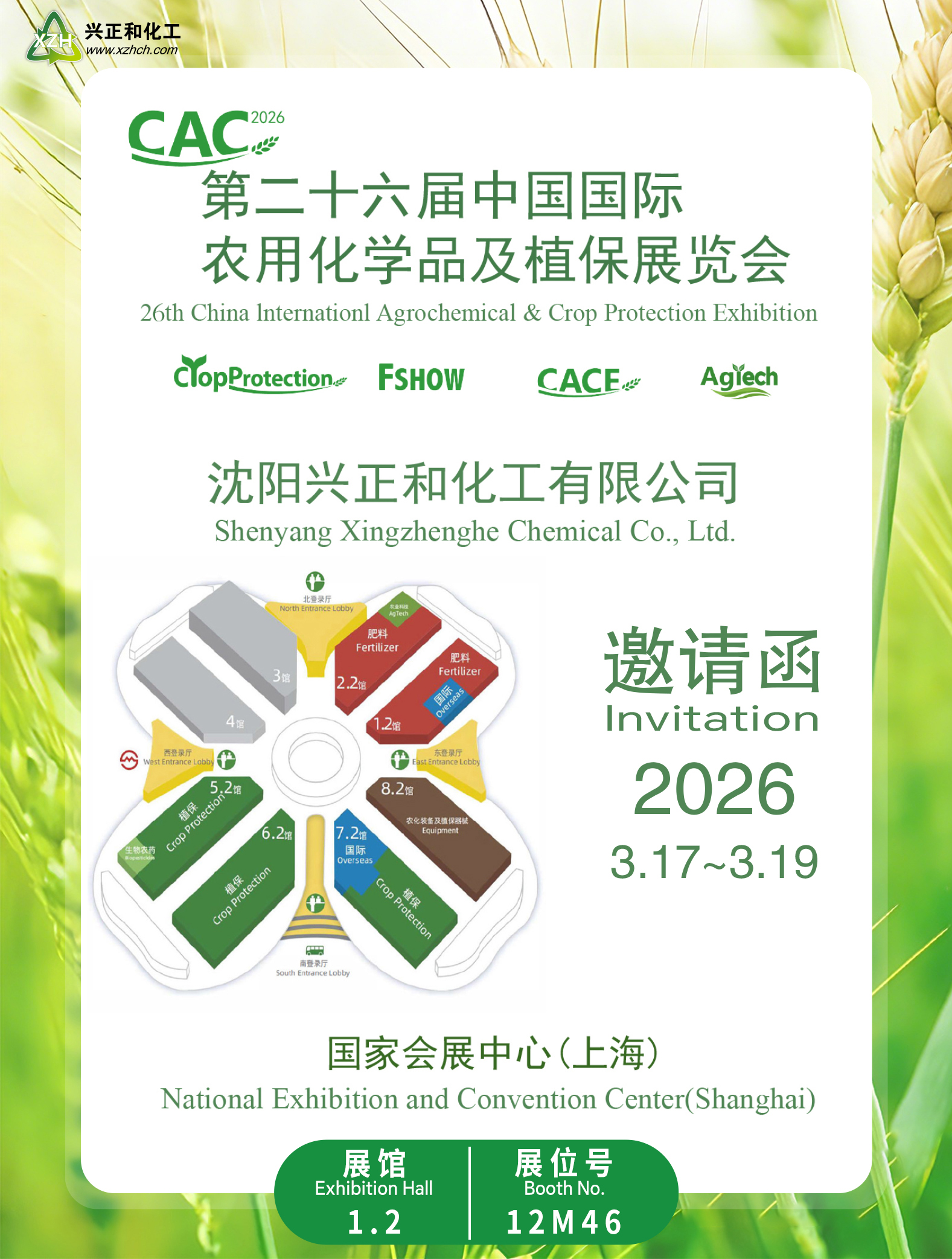 【Booth 12M46】Shenyang Xingzhenghe Chemical Makes Its Debut at the 26th CAC Exhibition, Launching a N
 Under the trend of green building materials, the market demand for HPMC continues to grow.
 Multi-Industry Synergy Drives HPMC Global Supply Chain Toward High-End Development

