
In dry-mix mortar production, air content is sometimes overlooked until a formulation suddenly behaves differently.
A manufacturer may notice that the fresh mortar:
Looks unusually fluffy
Feels lighter than before
Contains many visible bubbles
Shows a lower wet density
Becomes more difficult to finish
Produces pinholes or small voids after application
Requires a different amount of defoamer
When this happens, HPMC is often suspected first.
That is understandable because hydroxypropyl methylcellulose can influence rheology, water retention and stabilization of the aqueous phase.
However, excessive air in mortar is rarely controlled by HPMC alone.
The final air content may be influenced by:
HPMC + mixing energy + water dosage + sand grading + RDP + starch ether + surfactant-like components + defoamer + mixer design.
Therefore, the more useful question is not simply:
“Does HPMC create bubbles?”
but:
“Why is this mortar system entraining or retaining more air than expected?”
Air can enter mortar during:
Dry blending
Water addition
Mechanical mixing
Pumping
Manual stirring
Some air escapes quickly.
Some remains trapped inside the mortar.
The amount that remains depends on:
Mortar viscosity
Surface tension
Bubble size
Mixing intensity
Stabilizing additives
In a highly viscous system, small bubbles may be more difficult to release.
That is one reason cellulose-ether-modified mortar can show different air behavior from a simple cement–sand mixture.
HPMC can contribute to the stabilization of air introduced during mixing.
This does not mean that HPMC alone is always the source of air.
The practical effect depends on:
HPMC type
Dosage
Viscosity
Degree of modification
Mixing conditions
Other formulation ingredients
In some mortar systems, HPMC helps stabilize small air bubbles that would otherwise escape more quickly.
As a result, measured air content may increase.
But the magnitude of the change should be evaluated in the actual formulation.
Once HPMC hydrates, it increases the viscosity of the aqueous phase.
A more viscous liquid phase can slow:
Bubble movement
Bubble coalescence
Bubble escape
Some cellulose ether systems may also influence interfaces within the mortar.
The result can be a more stable population of fine air bubbles.
This is why two mortars with similar flow can still have different:
Wet density
Air content
Internal structure
A certain amount of entrained air is not automatically undesirable.
In some formulations, controlled air can improve:
Workability
Spreadability
Application feel
However, if air becomes excessive, possible effects may include:
Lower wet density
Reduced compactness
Lower strength in some systems
Surface pinholes
Increased porosity
Changes in water absorption
Different adhesive behavior
The acceptable air level depends on the specific mortar product.
Therefore, the objective is not necessarily “zero air,” but a controlled and repeatable air content.
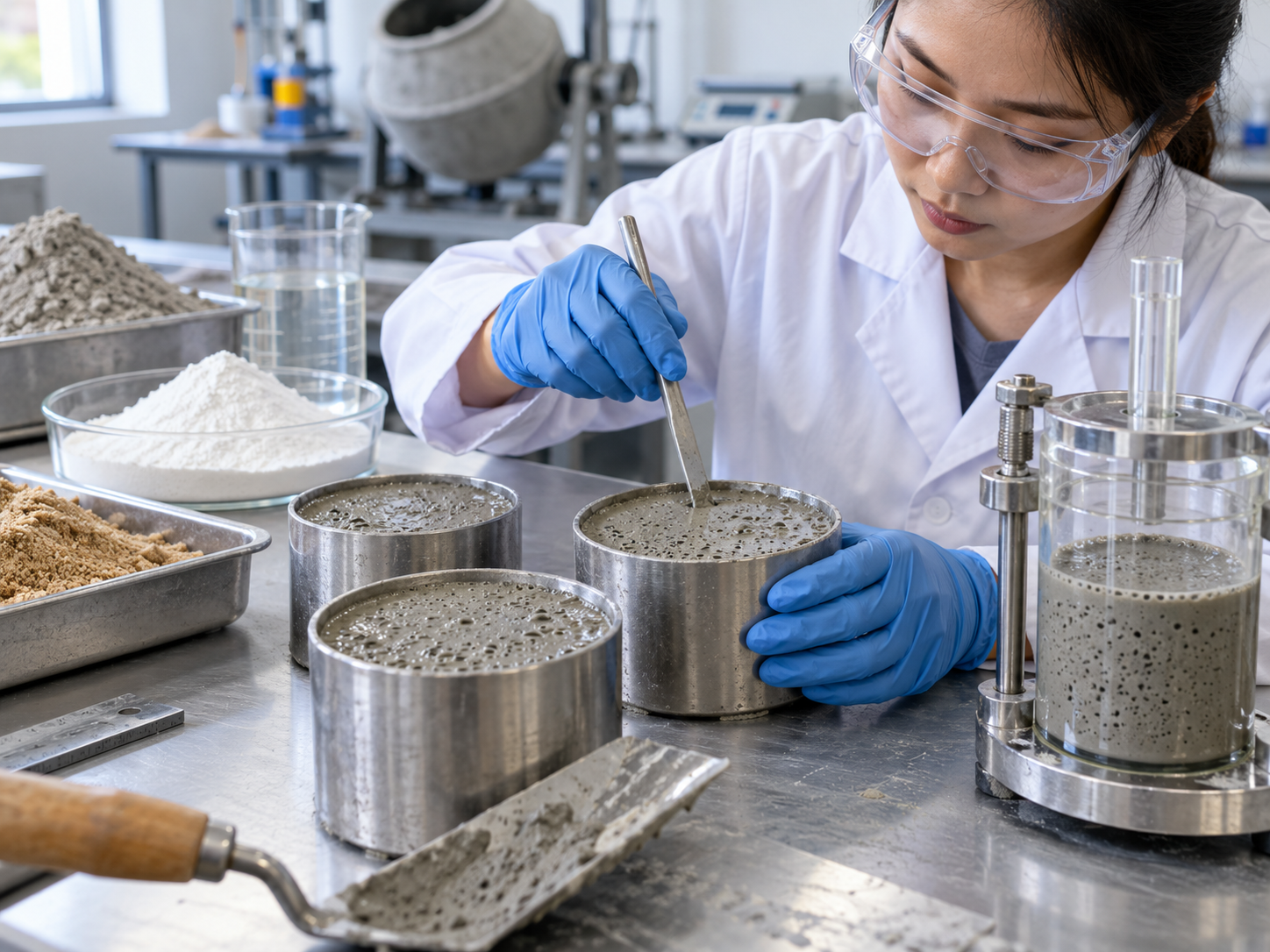
When HPMC dosage increases, the mortar may become:
More viscous
More cohesive
More capable of stabilizing small bubbles
This can make air release more difficult.
If a formulation already contains sufficient HPMC, further increasing dosage may cause:
Higher apparent viscosity
Lower wet density
More retained air
Therefore, when troubleshooting excessive air, the HPMC dosage should be checked rather than assuming that more cellulose ether will improve every property.
Not necessarily.
Nominal viscosity is only one characteristic.
The final air content can also depend on:
Molecular structure
Product modification
Dissolution behavior
Mortar composition
Mixing process
Two HPMC grades with the same nominal viscosity may still produce different air content in the same mortar formulation.
That is one reason why supplier replacement should include an application test rather than only a viscosity comparison.
The label “100,000 mPa·s” does not fully describe a cellulose ether.
Two samples may differ in:
Methoxy substitution
Hydroxypropoxy substitution
Particle size
Surface treatment
Gel temperature
Modification technology
Air-stabilizing behavior
Therefore, equal viscosity does not guarantee equal:
Water retention
Workability
Open time
Air content
For dry-mix mortar manufacturers, the finished mortar remains the more relevant comparison system.
Longer or more intensive mixing can introduce more air.
For example, a high-speed laboratory mixer may incorporate more air than a lower-energy production mixer.
If mixing continues after the mortar has already reached a uniform state, additional bubbles may be generated and stabilized.
This means a laboratory formulation can appear unusually aerated simply because:
Mixing speed is too high
Mixing time is too long
When comparing HPMC samples, mixing conditions should therefore remain identical.
Laboratory equipment and industrial mixers differ in:
Mixer geometry
Shear rate
Batch size
Mixing time
Filling level
A small laboratory mixer may create strong local turbulence.
A large dry-mix or wet-mortar mixer may behave differently.
Therefore, a laboratory air-content result should be treated as a screening result.
Production-scale confirmation may still be necessary.
Water content strongly influences mortar rheology.
If water dosage is too low:
Mortar may become very viscous
Bubbles may have difficulty escaping
If water dosage is too high:
Mortar may become unstable
Bubble distribution may also change
Therefore, when comparing HPMC samples, the water dosage should be controlled carefully.
A small change in water can make one mortar appear “more aerated” even when the HPMC itself has not changed.
The method of water addition can affect how quickly the dry materials wet and how much air is incorporated.
For example:
Adding all water immediately
Adding water gradually
Adding powder into water
may produce different mixing behavior.
For comparative testing, it is useful to keep:
Water temperature
Water dosage
Addition sequence
Mixing time
consistent.
Otherwise, differences may be incorrectly attributed to the HPMC sample.
Yes.
Sand grading influences the void structure of mortar.
If the sand becomes finer, the formulation may require more paste or water.
This can alter:
Viscosity
Bubble stability
Wet density
A change in sand source may therefore change measured air content even if the HPMC remains unchanged.
Fine particles increase total surface area.
A higher fine-particle content can make the mortar:
More cohesive
More viscous
More resistant to bubble escape
The fresh mortar may then feel:
Softer
Lighter
More aerated
This is another reason why HPMC should not be blamed immediately when mortar density changes.
It can.
Different cements may differ in:
Fineness
Mineral composition
Sulfate system
Supplementary materials
These differences can change:
Water demand
Paste viscosity
Interaction with additives
Therefore, changing cement source may indirectly change the air behavior of an HPMC-containing mortar.
Redispersible polymer powder can change the fresh and hardened behavior of mortar.
Depending on the product and formulation, it may affect:
Rheology
Surface properties
Bubble stability
If RDP dosage or grade changes, the measured air content may also change.
For this reason, when testing a new HPMC sample, the RDP should remain unchanged.
If both raw materials are replaced simultaneously and the mortar suddenly becomes more aerated, it becomes difficult to identify the cause.
A clearer test sequence is:
keep RDP constant → change HPMC → compare.
Then, if required:
keep HPMC constant → change RDP → compare.
This one-variable approach produces more useful formulation data.
Yes.
Starch ether is used in some dry-mix mortar formulations to adjust:
Sag resistance
Tack
Application rheology
Because it changes rheology, it may also indirectly influence bubble release.
If starch ether dosage becomes too high, mortar may feel heavier or more structured.
This can make small bubbles more difficult to escape.
So excessive air should be investigated across the full additive package.
Defoamer is used in some mortar formulations to help control unwanted air.
Its effectiveness depends on:
Defoamer chemistry
Dosage
Powder form
Compatibility with HPMC
RDP
Cement system
A suitable defoamer may reduce:
Large bubbles
Persistent foam
Excess air content
But it should be selected through testing.
Not necessarily.
Adding too much defoamer may create other formulation issues.
Depending on the system, excessive defoamer may influence:
Surface appearance
Wetting
Dispersion
Local defects
Therefore, defoamer dosage should be optimized rather than continuously increased.
A dosage gradient is often more informative.
Keep the mortar formulation unchanged.
Prepare several samples with:
Lower defoamer dosage
Current dosage
Higher dosage
Then compare:
Wet density
Air content
Flow
Application feel
Surface pinholes
Hardened appearance
This helps identify whether the defoamer level is actually responsible for the problem.
Wet density is a practical indirect indicator of air content.
If two mortar samples have similar formulation and water dosage but one shows much lower wet density, it may contain more entrained air.
For example, during supplier comparison, wet density can help identify whether one HPMC sample is stabilizing more air than another.
However, wet density should be interpreted together with:
Flow
Water content
Raw-material density
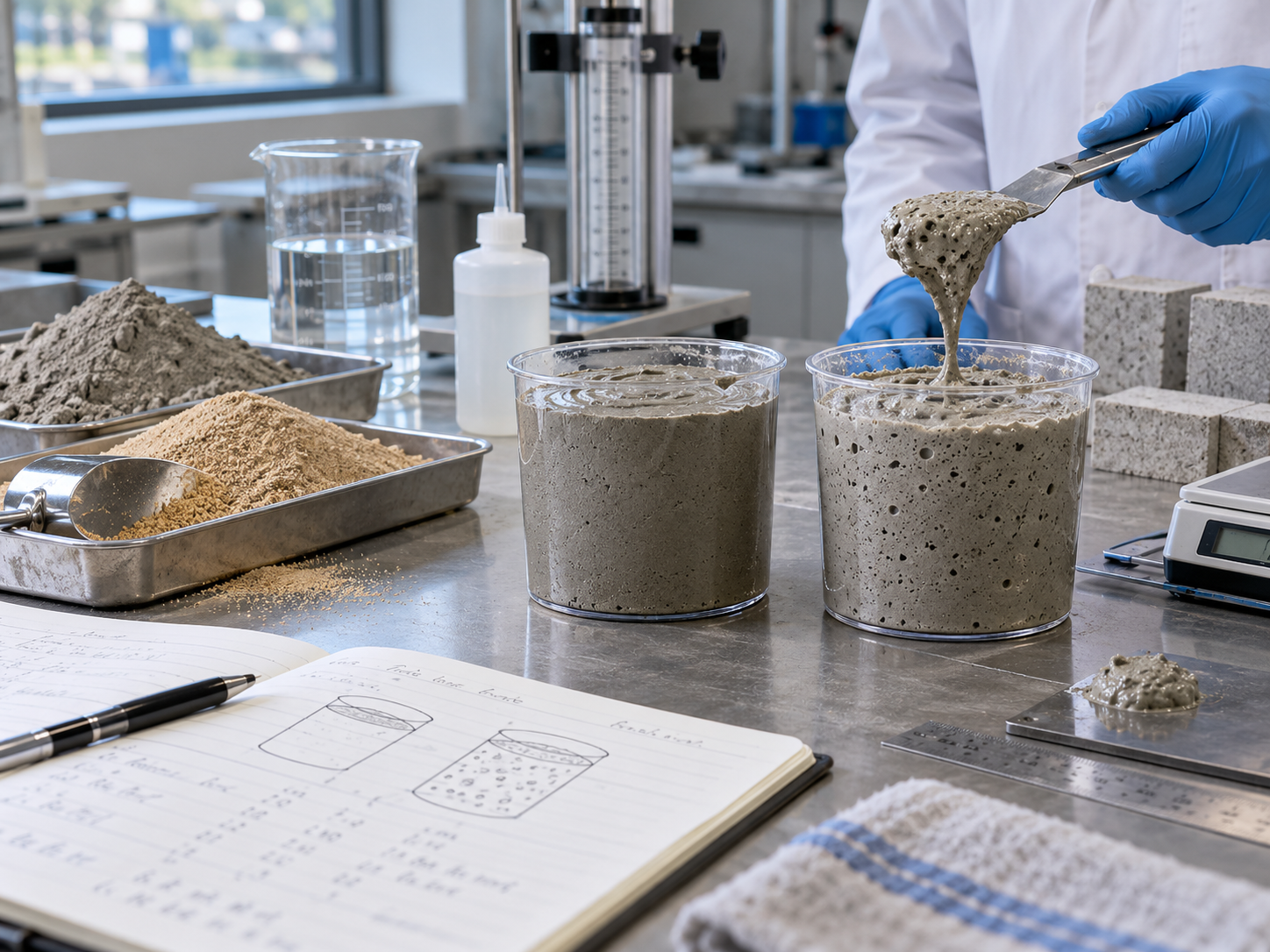
Visual observation is useful, but it is subjective.
One operator may describe mortar as “fluffy,” while another may consider it normal.
A more controlled comparison can include:
Wet density
Air-content measurement
Flow test
Timed observation
This creates numerical data instead of relying only on hand feel.
Bubble size distribution can influence mortar behavior.
Large bubbles are easier to observe and may create:
Surface voids
Visible pinholes
Fine bubbles may be less visible but still reduce density.
A formulation can therefore look smooth while still containing relatively high air content.
This is another reason why appearance alone does not fully describe the system.
Pinholes may result from air moving toward the surface during:
Troweling
Smoothing
Drying
The problem may be influenced by:
Air content
Mortar viscosity
Substrate absorption
Application thickness
Finishing method
Therefore, surface pinholes should not automatically be blamed on HPMC.
A formulation and application review is more useful.
Tile adhesive requires a balance of:
Water retention
Workability
Open time
Sag resistance
Adhesive performance
Excessive air may alter:
Contact area
Mortar density
Troweling behavior
Therefore, air content is one of the parameters worth checking when an HPMC change produces different tile-adhesive behavior.
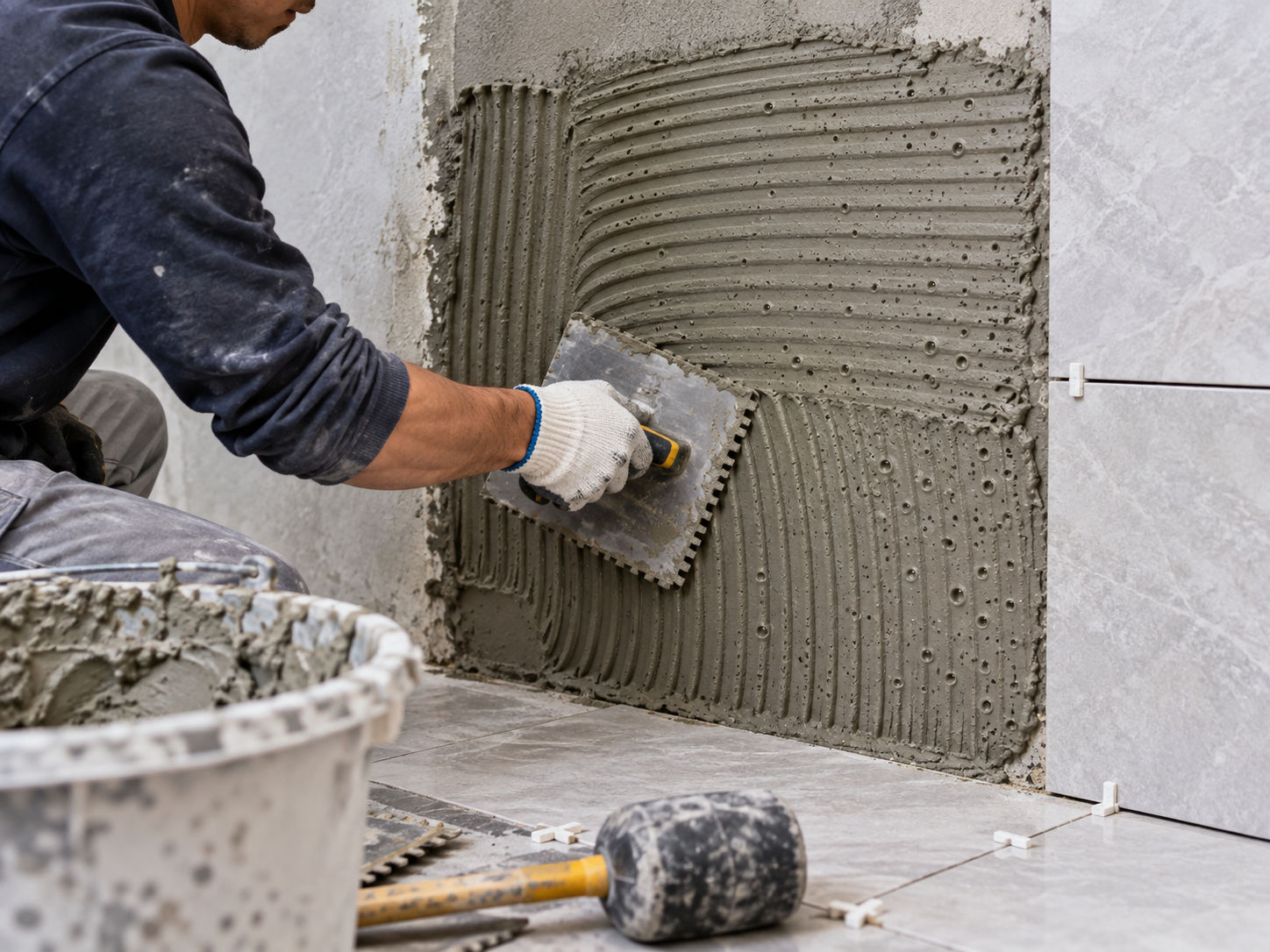
Thin-layer products can make bubbles more visible.
During application, trapped air may appear as:
Pinholes
Small craters
Uneven surface texture
Because these products are applied thinly, surface appearance may become more sensitive to bubble stability.
HPMC selection should therefore consider not only viscosity but also the finished application behavior.
Surface-treated HPMC is designed to delay hydration under certain conditions, helping dispersion in cold water or specific processing systems.
Because hydration timing changes, the early mixing process may also differ.
This can influence:
Viscosity development
Bubble release
Mixing response
Therefore, surface-treated and non-surface-treated HPMC should not be assumed to behave identically in mortar.
Yes.
If viscosity develops very quickly during mixing, air introduced early in the process may become trapped before it can escape.
If viscosity builds more gradually, some air may escape before the mortar reaches its final structure.
This is one reason why hydration behavior can matter in addition to final viscosity.
Dry-mix mortar is a multi-component powder.
During storage, factors such as:
Moisture
Segregation
Additive distribution
may affect the condition of the final mixed mortar.
If a bag absorbs moisture, some additives may not disperse exactly as before.
Therefore, when unusual air behavior appears, it may be useful to compare:
Fresh production
Stored material
under the same test conditions.
Keep the base formulation fixed.
Use the same:
Cement
Sand
RDP
Starch ether
Defoamer
Water
Mixing procedure
Then test:
Current HPMC
versus
New HPMC sample.
Measure:
Flow
Wet density
Air content
Water retention
Open time where relevant
Application feel
This makes the comparison more meaningful.
If the dosage changes during the first comparison, it becomes difficult to know whether the result comes from:
Product difference
Dosage difference
Therefore, the first screening is usually clearer when the samples are tested at the same dosage.
After that, dosage optimization can be performed separately.
Possible next steps include:
Confirm mixing conditions.
Repeat the test.
Measure wet density.
Check whether water demand differs.
Test a small dosage adjustment.
Evaluate defoamer response.
Confirm water retention and application behavior.
This helps determine whether the new product can be adapted to the formulation or whether another grade is more suitable.
If a new HPMC sample produces more air, immediately increasing defoamer may hide the original difference.
For technical evaluation, it is often more useful to first establish:
how the HPMC behaves in the existing formulation.
After the baseline is understood, the formulation can be optimized.
This prevents unnecessary changes to multiple raw materials.
Useful records may include:
HPMC grade
HPMC dosage
Water dosage
Mixing speed
Mixing time
Wet density
Flow
Air content
Temperature
Application observations
For tile adhesive, additional observations may include:
Open time
Sag
Troweling behavior
Consistent records make supplier comparison easier.
Temperature can change:
HPMC hydration
Mortar viscosity
Water evaporation
Workability
Two tests performed at very different temperatures may not be directly comparable.
Therefore, laboratory comparison should ideally use similar temperature conditions.
Yes.
If production equipment changes, so can the amount of air introduced during mixing.
Possible changes include:
New mixer
Different blade design
Higher speed
Different batch size
Longer mixing cycle
If air content changes after an equipment adjustment, the mixer should be investigated before changing the HPMC specification.
A mixer operating at very low filling level may create different shear and turbulence than the same mixer at normal production capacity.
This can alter:
Powder distribution
Air incorporation
Mixing efficiency
For reliable formulation comparison, batch size should remain consistent.
A practical sequence is:
Step 1: Check mixing
Confirm speed, time and batch size.
Step 2: Check water
Confirm actual water dosage.
Step 3: Check HPMC
Confirm grade, dosage and batch.
Step 4: Check other additives
Review RDP, starch ether and defoamer.
Step 5: Check sand and cement
Look for recent raw-material changes.
Step 6: Measure wet density and air
Avoid relying only on appearance.
Step 7: Change one variable at a time
Use controlled trials.
For a mortar with excessive air, useful information includes:
Mortar application
HPMC viscosity grade
HPMC dosage
Cement type
Sand type
RDP dosage
Defoamer type and dosage
Water dosage
Mixing procedure
Measured wet density
Main observed problem
This is more useful than simply asking:
“Do you have an HPMC that does not make bubbles?”
HPMC is only one part of a dry-mix mortar formulation.
The final behavior results from interactions among:
cellulose ether + binder + aggregate + polymer powder + rheology modifiers + defoamer + water + mixing.
Therefore, a product that works well in one formulation may need adjustment in another.
The purpose of formulation testing is not to identify one “good” or “bad” raw material in isolation, but to determine whether the complete system meets the required application conditions.
It can contribute to the stabilization of air introduced during mixing. The actual effect depends on HPMC type, dosage, viscosity, mixing conditions and other formulation components.
Not necessarily. Air content depends on more than nominal viscosity, including product structure, dosage and mortar formulation.
In some mortar systems, a higher dosage can increase viscosity and make bubble release more difficult.
Not always. The original cause may come from mixing, HPMC dosage, RDP, sand grading or other factors.
The new HPMC may stabilize more air, but water dosage, mixing and raw-material changes should also be checked.
For the first controlled comparison, using the same dosage is usually more useful. Dosage optimization can follow afterward.
Yes. Longer or higher-energy mixing may incorporate more air and change fresh-mortar behavior.
When HPMC-modified mortar contains more air than expected, the issue should not be diagnosed from the HPMC specification alone.
The result is usually influenced by several variables:
HPMC dosage + viscosity development + mixing energy + water + sand + RDP + starch ether + defoamer.
A more reliable troubleshooting method is:
fix the base formulation → control mixing → measure wet density and air content → compare HPMC samples → adjust one variable at a time.
This approach helps distinguish an HPMC-related difference from a broader formulation or production issue.
Shenyang Xingzhenghe Chemical Co., Ltd. supplies construction-grade HPMC for tile adhesive, dry-mix mortar and other cement-based formulations. Product specifications, samples and batch information can be provided according to customer requirements. Final grade and dosage should be confirmed through testing in the customer's actual mortar formulation.
 HPMC in Self-Leveling Mortar: Evaluating Flow, Stability and Surface Quality
 HPMC in Gypsum Plaster: How It Affects Workability, Water Retention and Surface Finish
 Why Does HPMC-Modified Mortar Contain Too Much Air? Causes, Testing and Formulation Troubleshooting
 How to Evaluate HPMC Quality Beyond Viscosity? Key Parameters for Construction Grade HPMC Selection

