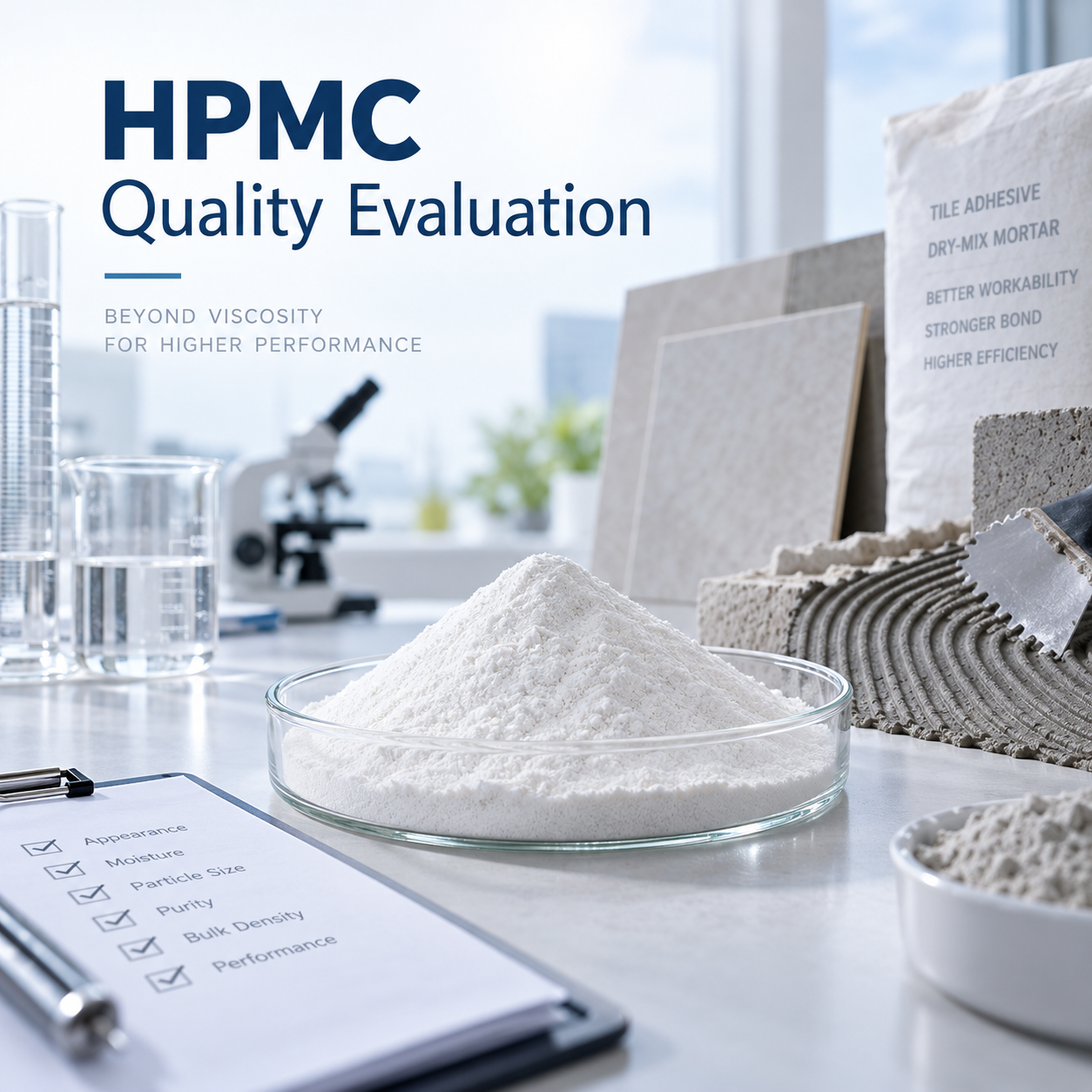

Hydroxypropyl Methyl Cellulose (HPMC) is a non-ionic cellulose ether produced from natural plant cellulose through chemical modification. In the construction industry, HPMC serves as a functional additive for dry mix mortar, primarily providing water retention, thickening, and workability improvement.
Product Basic Characteristics
Construction grade HPMC appears as a white or off-white powder. It is soluble in cold water, forming a transparent or translucent colloidal solution. In mortar systems, HPMC does not participate in hydration reactions but primarily regulates the rheological state of the mortar through physical means.
Its main performance characteristics include:
Water Solubility: Disperses and dissolves in cold water without heating
Water Retention Capacity: Helps provide sufficient time for cementitious material hydration by slowing down moisture evaporation
Thickening Effect: Appropriately increases mortar viscosity, helping to improve sag resistance
Non-Ionic Structure: Good adaptability to acidic and alkaline environments, compatible with cement, gypsum, lime, and other cementitious materials
Improved Workability: Makes mortar smoother and less sticky to trowels
Main Grades and Specifications
Based on parameters such as viscosity and gel temperature, construction grade HPMC is available in various specifications to suit different mortar systems and construction conditions. Common specifications include:
| Parameter | Typical Range | Description |
|---|---|---|
| Appearance | White or off-white powder | —— |
| Methoxy Content (%) | 19.0 – 24.0 | Affects gel temperature and water retention |
| Hydroxypropoxy Content (%) | 4.0 – 12.0 | Affects hydrophilicity and dissolution rate |
| Loss on Drying (%) | ≤ 5.0 | Facilitates weighing and storage |
| Viscosity (mPa·s, 2% solution, 20°C) | 400 – 100,000 | Select viscosity grade based on mortar type |
Main Application Areas
Construction grade HPMC is suitable for various dry mix mortar products. Common applications include:
1. Cement-Based Plastering Mortar
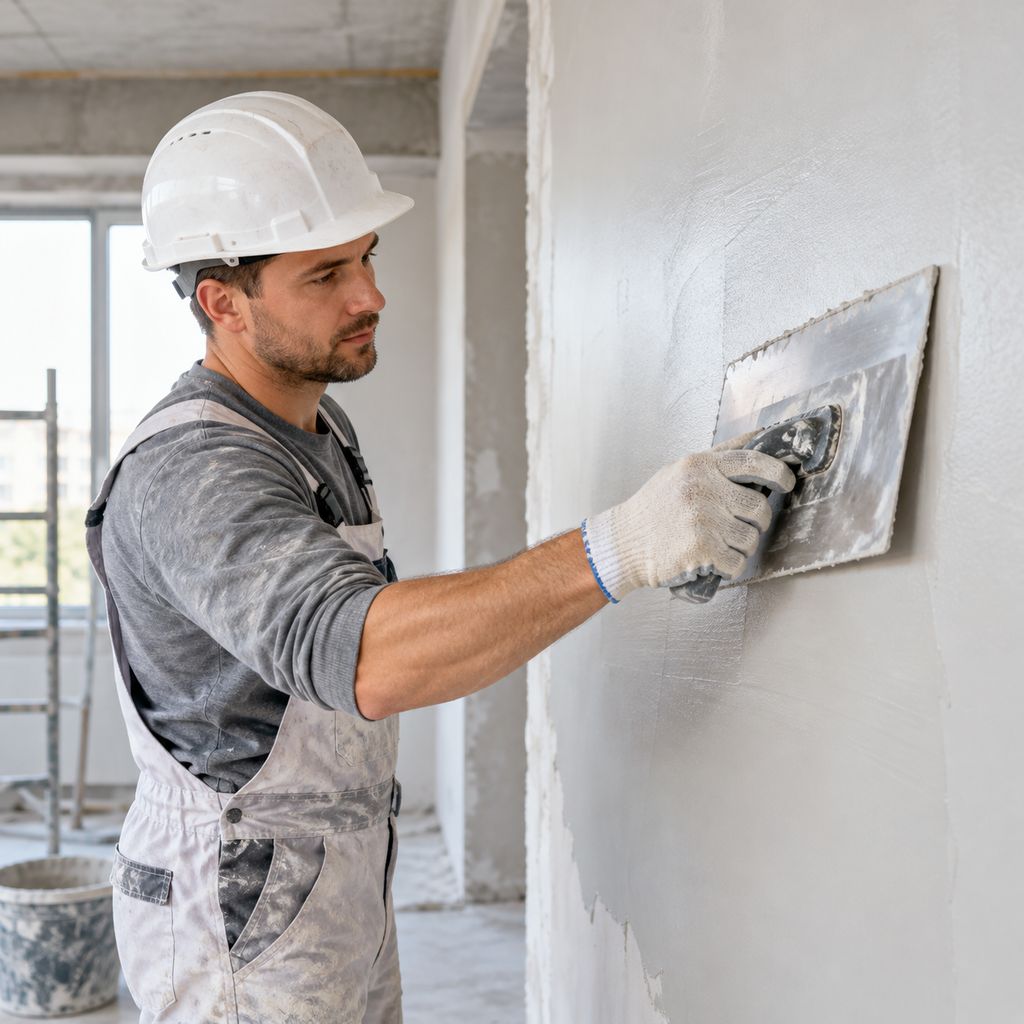
Adding HPMC to cement-based plastering mortar helps improve water retention, reducing cracking risks caused by rapid water absorption from the substrate, while also improving workability.
2. Masonry Mortar
HPMC assists in extending the open time of mortar, improving spreading length and masonry efficiency, and ensuring dense and full mortar joints.
3. Tile Adhesives
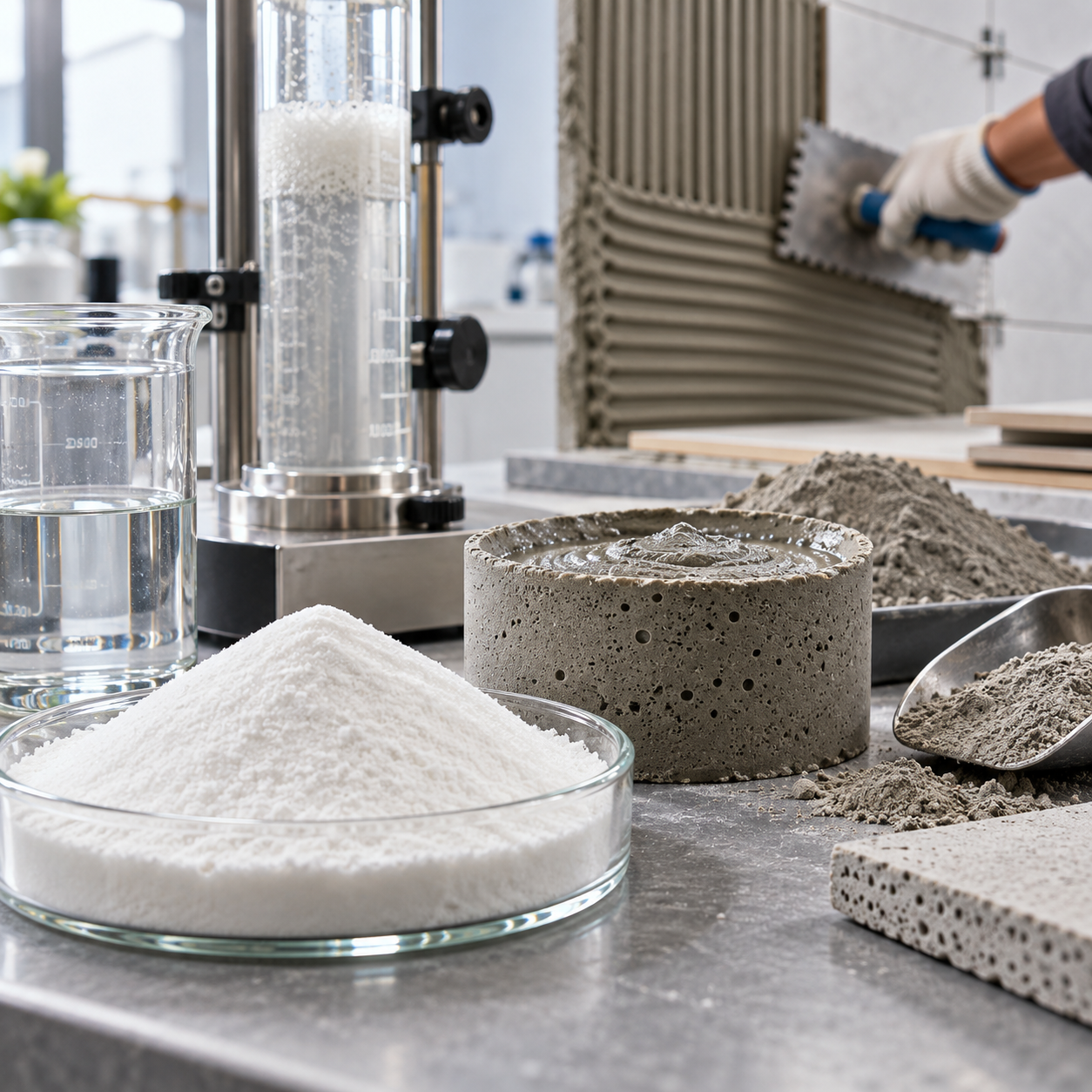
Using HPMC in tile adhesives helps extend open time, allowing easier adjustment of tile positions during installation, while also improving slip resistance.
4. External Thermal Insulation Composite System (ETICS) Mortars
In ETICS basecoat and adhesive mortars, HPMC helps enhance water retention and construction convenience.
5. Gypsum-Based Mortars
In gypsum-based plasters and joint fillers, HPMC assists in regulating paste stability and improving troweling feel.
6. Self-Leveling Mortars
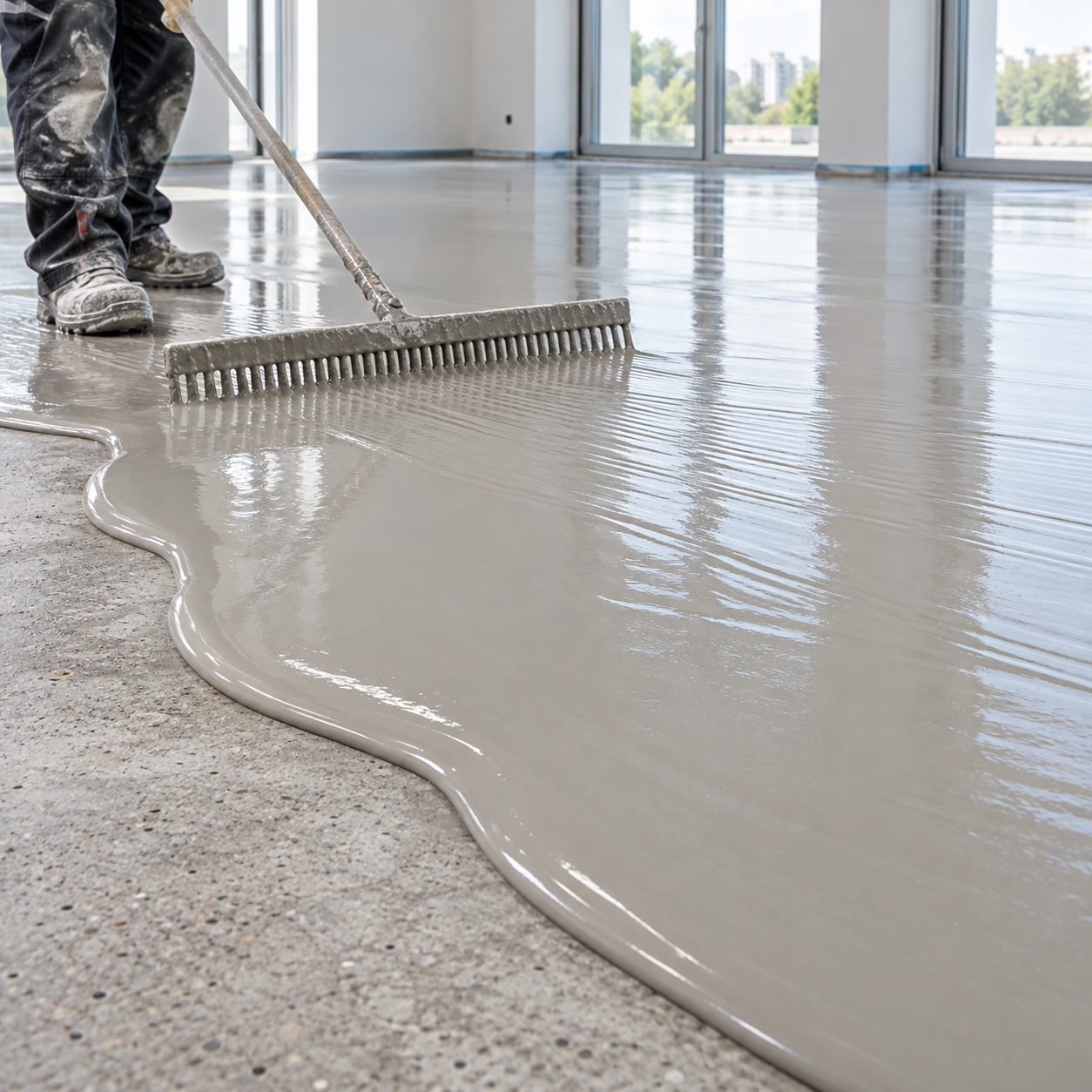
HPMC helps balance flowability and suspension stability in self-leveling mortar formulations.
Technical Data Reference (Typical Range)
| Parameter | Typical Range | Description |
|---|---|---|
| Appearance | White or off-white powder | —— |
| Methoxy Content (%) | 19.0 – 24.0 | Affects gel temperature and water retention |
| Hydroxypropoxy Content (%) | 4.0 – 12.0 | Affects hydrophilicity and dissolution rate |
| Loss on Drying (%) | ≤ 5.0 | Facilitates weighing and storage stability |
| Viscosity (mPa·s, 2% solution, 20°C) | 400 – 100,000 | Select viscosity grade based on mortar type |
Note: The above data represent typical product performance ranges. Different product specifications may vary. Please refer to specific product test reports for accurate values.
Usage Recommendations
Recommended Addition Rate: Typically 0.02% – 0.50% of the total cementitious material weight. Specific dosage should be determined through trials based on mortar type, construction requirements, and environmental conditions.
Mixing Method: Premix HPMC with other powder materials before adding to the mixing equipment with water. This facilitates uniform dispersion and reduces lump formation.
Environmental Factors: In high-temperature construction environments or when substrate absorption is high, appropriate adjustment of HPMC dosage or combination with other water-retaining additives may be considered.
Packaging and Storage
Packaging Forms: net weight 25kg per bag. Ton bags or other custom packaging can also be provided upon request.
Storage Conditions: Recommended storage in a cool, dry, well-ventilated indoor environment away from direct sunlight and moisture.