
Hydroxypropyl methylcellulose, commonly abbreviated as HPMC, is a nonionic cellulose ether used to adjust water retention, viscosity, consistency and application properties in dry-mix mortar and selected water-based formulations.
When purchasing HPMC, customers may encounter descriptions such as:
Surface-treated HPMC
Non-surface-treated HPMC
Instant-dissolving HPMC
Delayed-solubility HPMC
Direct-dissolving HPMC
These descriptions are sometimes used inconsistently. Surface treatment does not simply determine whether an HPMC product is “good” or “bad.” It mainly influences how the powder disperses and begins to dissolve when it contacts water.
Selecting the appropriate type depends on the production process, mixing sequence, water temperature and final application.
Surface-treated HPMC has undergone a controlled treatment that temporarily delays hydration when the powder is introduced into water under specified conditions.
This delay allows the particles to disperse before the polymer begins developing viscosity. Once the treatment effect is neutralized or the required conditions are reached, the particles hydrate and the solution viscosity increases.
The main purpose of surface treatment is to reduce the risk of:
Rapid surface hydration
Gel formation around dry particles
Fish-eye formation
Lumps
Incomplete dissolution
Surface-treated grades are often described as instant-dispersing or delayed-dissolving HPMC. However, “instant” should not be understood as meaning that full viscosity develops immediately. The powder may disperse quickly while complete hydration still requires sufficient time, agitation and appropriate pH conditions.
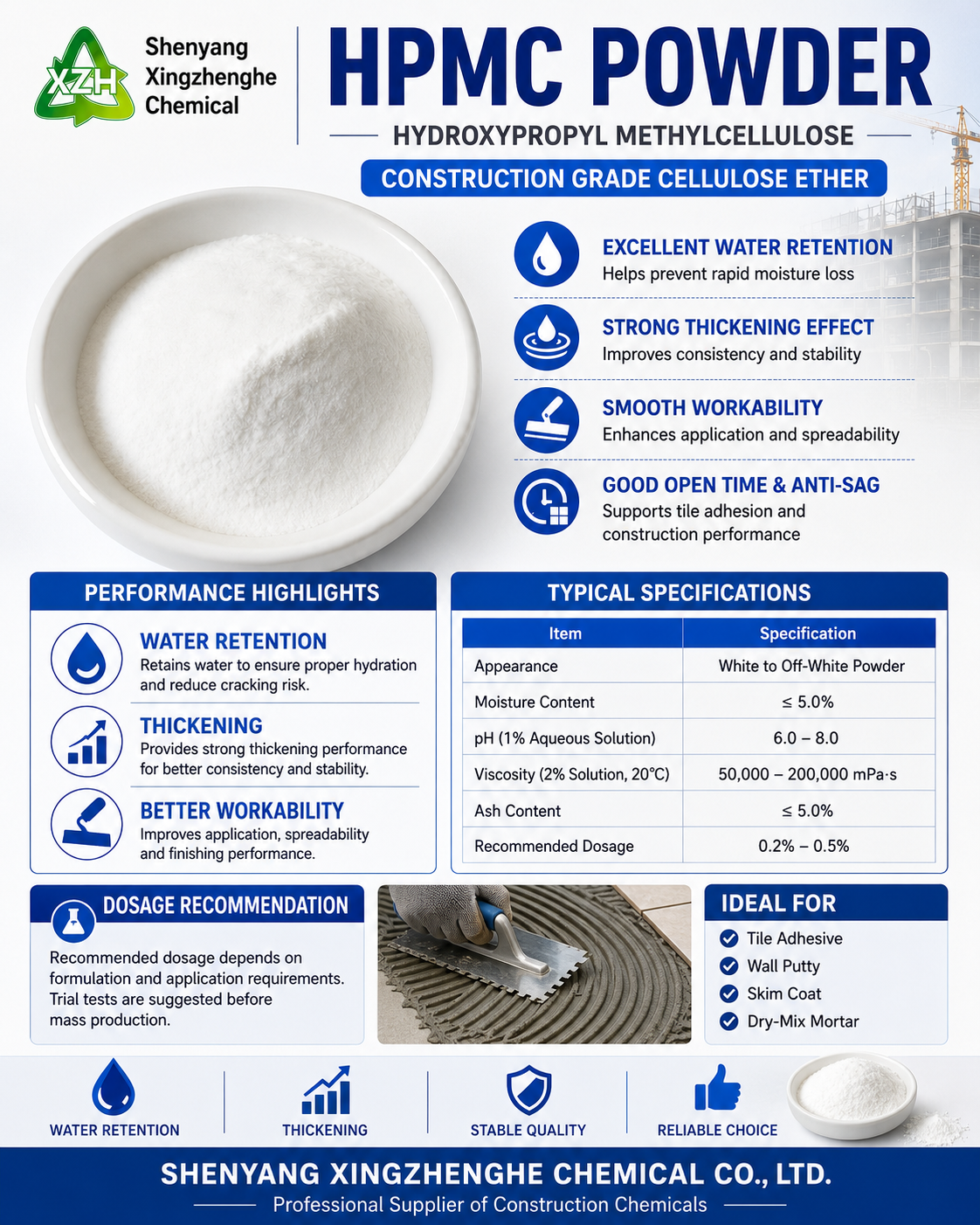
Non-surface-treated HPMC begins hydrating more directly when it contacts cold water. If the powder is added too quickly to a small amount of water, the outer surface of the particles may form a gel layer before the inside is fully wetted.
This can create persistent lumps.
Non-surface-treated HPMC can still be used efficiently when the correct processing method is followed. It is commonly suitable for:
Dry blending with cement, gypsum, sand or fillers
Hot-water dispersion followed by cooling
Premixing with other dry raw materials
Production systems with controlled powder addition and effective agitation
In dry-mix mortar production, non-surface-treated HPMC is generally dispersed throughout the dry ingredients before water is added at the job site. Because the product is already diluted by other powders, direct lump formation is less likely when mixing is adequate.
Surface treatment primarily affects early dispersion and dissolution behavior. It does not automatically determine:
Final solution viscosity
Water-retention capacity
Methoxy content
Hydroxypropoxy content
Gel temperature
Application dosage
Mortar adhesion
Overall product quality
Two HPMC grades can have similar final viscosity but different dispersion profiles. Conversely, two surface-treated grades may have different viscosity, substitution levels and application performance.
Buyers should therefore evaluate surface treatment as one specification among several, rather than using it as the sole quality criterion.
| Property | Surface-Treated HPMC | Non-Surface-Treated HPMC |
|---|---|---|
| Initial contact with water | Designed to disperse before rapid viscosity development | Begins hydrating more directly |
| Risk of lump formation | Lower under suitable conditions | Higher if added incorrectly to cold water |
| Viscosity development | May be intentionally delayed | Usually begins earlier |
| Direct addition to water | Often more convenient | Requires controlled addition or another dissolution method |
| Dry-mix mortar use | Suitable | Also widely suitable |
| Water-based liquid production | Often preferred where direct dispersion is required | Suitable with proper equipment and procedure |
| Final performance | Depends on the full product specification | Depends on the full product specification |
The actual behavior must be confirmed using the supplier’s technical data because treatment methods and activation conditions vary.
Surface-treated HPMC may be selected for water-based production systems where the powder is introduced directly into water and uniform dispersion is important.
Possible applications include:
Water-based coatings
Detergent formulations
Selected personal-care formulations
Liquid construction products
On-site aqueous preparation
Systems with limited high-shear mixing capacity
Its delayed hydration provides time for particles to become distributed throughout the liquid before the viscosity increases.
However, the formulation pH is important. Some surface-treated grades are designed so that viscosity develops after the pH changes. The activation mechanism and recommended pH range should be confirmed with the supplier.
Non-surface-treated HPMC is widely used in dry-powder formulations such as:
Tile adhesive
Wall putty
Cement plaster
Gypsum plaster
ETICS mortar
Masonry mortar
Repair mortar
Self-leveling products
During factory production, HPMC is blended with cement, gypsum, sand and other dry ingredients. At the construction site, water is added to the complete dry mix rather than directly to concentrated HPMC powder.
Uniform dry blending and an appropriate mixing procedure remain important. Poorly blended dry mortar may produce local HPMC concentrations and inconsistent performance.
The exact procedure should follow the product data sheet. A general process may include:
Add the required water to the mixing tank.
Start moderate agitation.
Add the HPMC gradually across the moving liquid surface.
Allow the particles to disperse.
Adjust pH or processing conditions when required by the grade.
Continue mixing until the expected viscosity develops.
Allow sufficient hydration time before final evaluation.
Do not evaluate final viscosity immediately after powder addition. Cellulose ether solutions may require time to reach stable hydration.
Excessive shear, uncontrolled heating or incompatible electrolytes may influence the result.
Several processing methods may be considered.
Premix HPMC thoroughly with a larger quantity of cement, filler, pigment or another compatible dry ingredient. Add the dry blend gradually to water under agitation.
This reduces the local concentration of HPMC particles and helps prevent lumps.
HPMC can be dispersed in hot water under controlled conditions because it does not hydrate in the same way above its thermal-gelation range. Cold water is then added, and hydration occurs as the mixture cools.
The correct temperature and sequence depend on the grade. Uncontrolled heating should be avoided.
Add HPMC slowly to strongly agitated cold water. This method requires suitable mixing equipment and careful powder feeding to avoid fish eyes.
HPMC must be added directly to water;
the production system requires easy initial dispersion;
mixing equipment has limited ability to break lumps;
delayed viscosity development helps production;
a water-based liquid formulation is being prepared.
HPMC is first blended with dry raw materials;
the product is used in factory-produced dry-mix mortar;
the production process includes a controlled dissolution method;
early hydration is acceptable;
the manufacturer has suitable dispersion equipment.
Neither type is universally better. The correct choice is the one that matches the manufacturing process and application.
Surface treatment should be evaluated together with:
Viscosity and test method
Solution concentration
Test temperature
Methoxy content
Hydroxypropoxy content
Gel temperature
Moisture
Ash content
pH
Particle size
Water-retention performance
Intended application
Recommended dosage
When comparing viscosity, confirm whether the value was measured using a Brookfield viscometer or another method. Results from different solution concentrations, temperatures, spindle settings and rotational speeds are not directly comparable.
Not necessarily. A surface-treated product may disperse quickly, but complete hydration and final viscosity development can still take time.
Incorrect. Non-surface-treated grades are widely used in dry-mix mortar and can provide suitable performance when processed correctly.
Surface treatment mainly changes dispersion and hydration behavior. Mortar water retention, workability and consistency depend on the complete HPMC specification, dosage and formulation.
Dry-mix mortar, water-based paint, detergent and personal-care formulations have different processing and performance requirements. A grade selected for tile adhesive may not be suitable for direct addition to a liquid detergent.
Before placing a bulk order:
Confirm whether the product is surface-treated.
Request the recommended dissolution procedure.
Confirm the viscosity test method.
Test dispersion using the actual production water.
Record the time required for viscosity development.
Check for fish eyes or undissolved particles.
Evaluate the product in the final formulation.
Compare storage stability and batch consistency.
Review the batch COA and current SDS.
The difference between surface-treated and non-surface-treated HPMC is mainly related to early dispersion and dissolution behavior.
Surface-treated HPMC can be useful when the powder is added directly to water and delayed viscosity development supports uniform dispersion. Non-surface-treated HPMC is widely used in dry-mix mortar and other systems where the powder is dry-blended or dissolved through a controlled procedure.
Selection should be based on the production method, formulation pH, water temperature, mixing equipment and required application performance. Surface treatment should always be considered together with viscosity, substitution level, gel temperature, particle size and application testing.
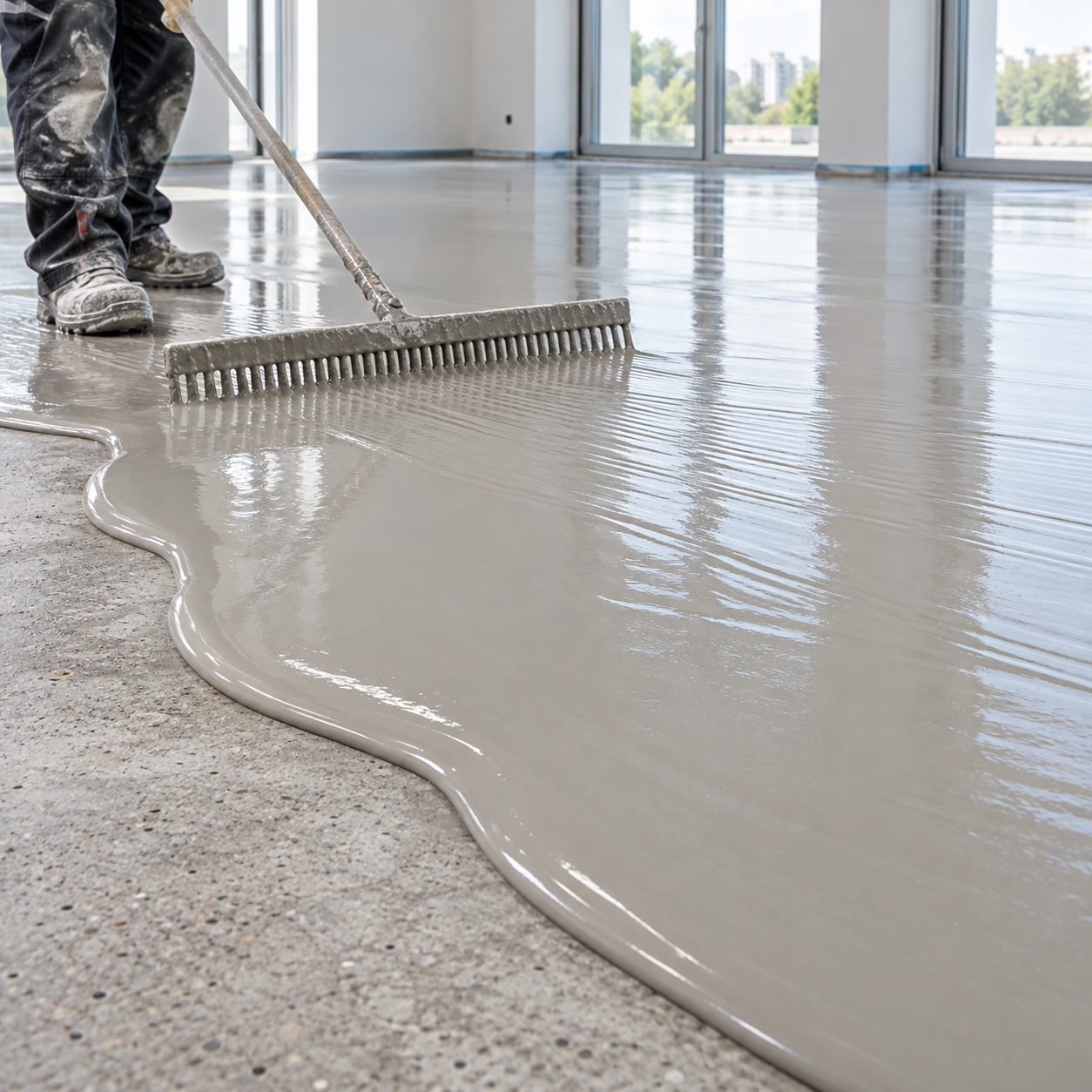 HPMC in Self-Leveling Mortar: Evaluating Flow, Stability and Surface Quality
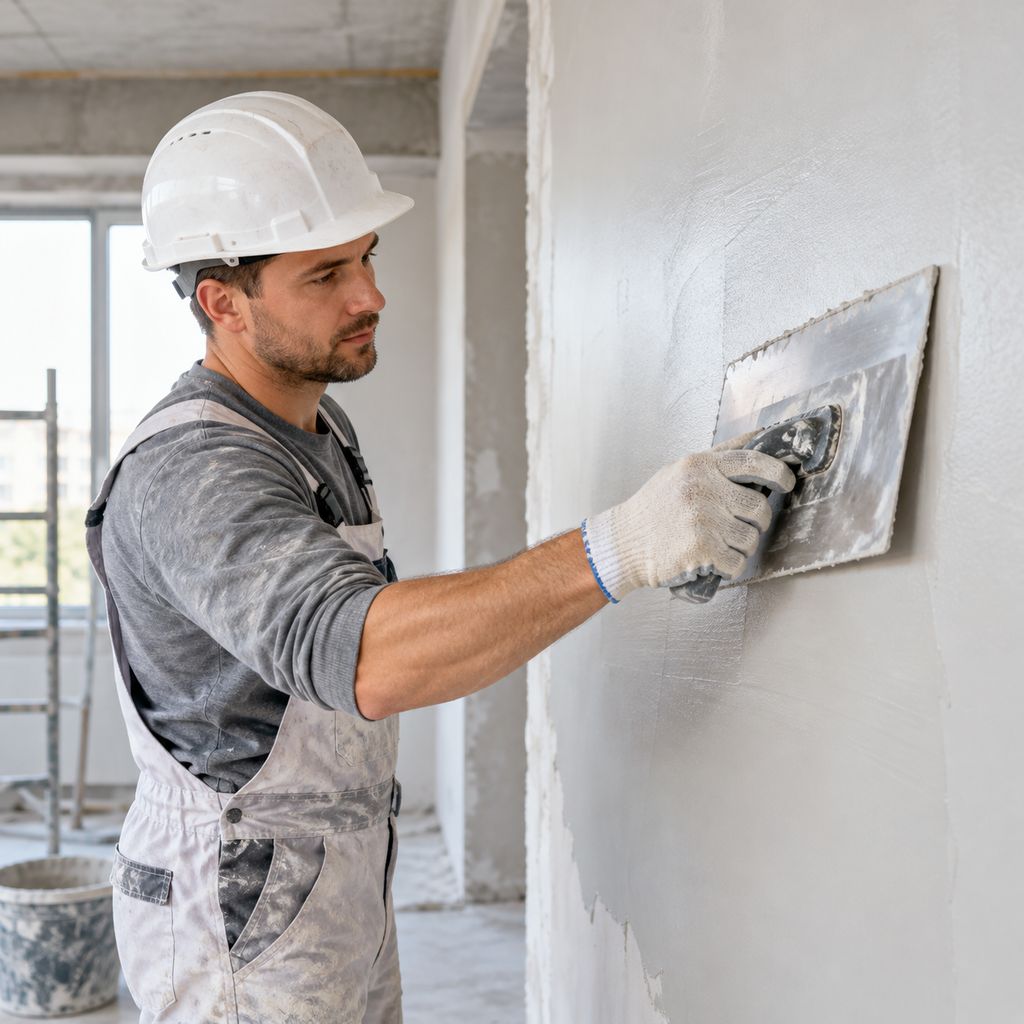 HPMC in Gypsum Plaster: How It Affects Workability, Water Retention and Surface Finish
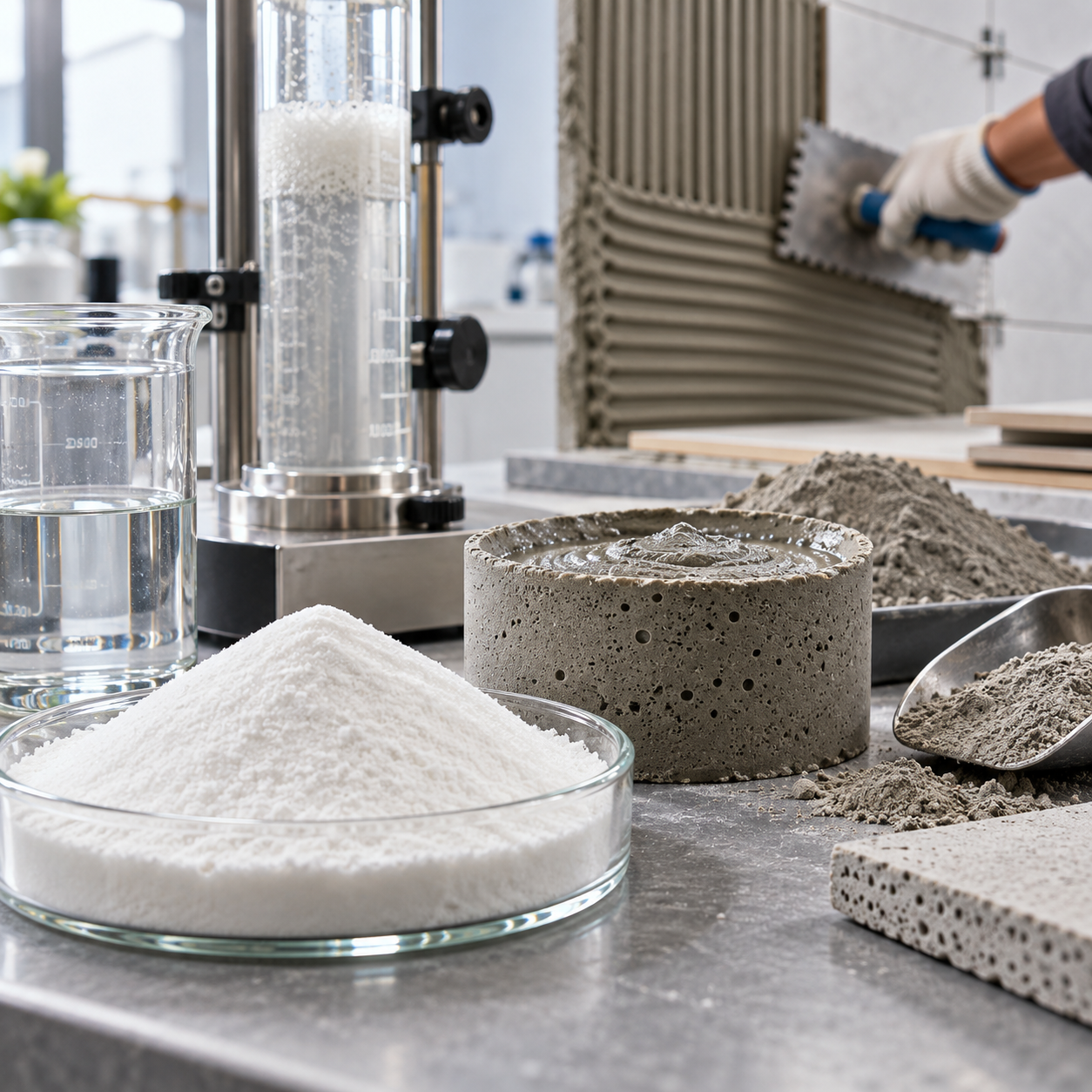 Why Does HPMC-Modified Mortar Contain Too Much Air? Causes, Testing and Formulation Troubleshooting
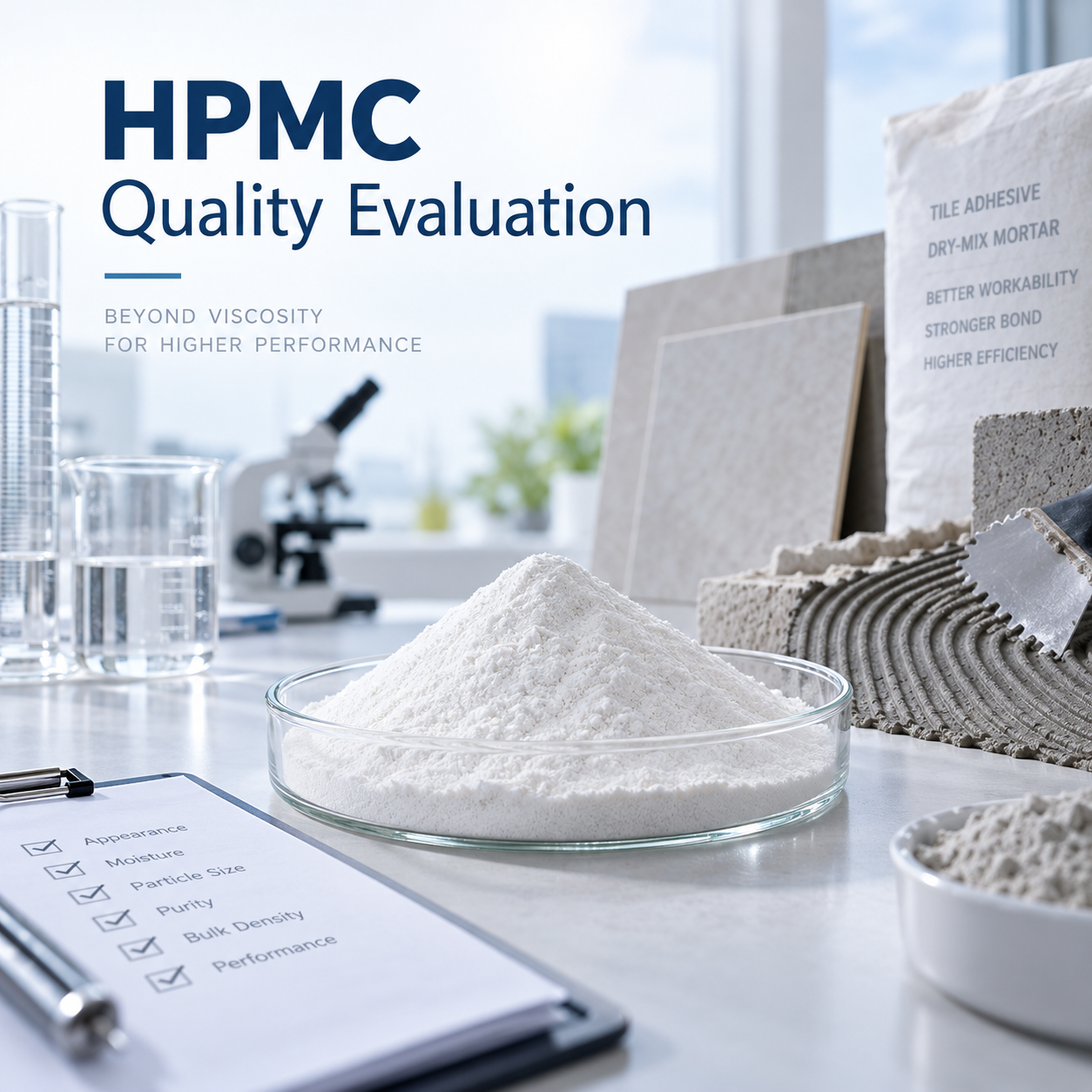 How to Evaluate HPMC Quality Beyond Viscosity? Key Parameters for Construction Grade HPMC Selection

