
Hydroxypropyl Methylcellulose (HPMC) is a cellulose ether widely used in construction formulations such as tile adhesives, cement-based mortars, wall putty and gypsum-based products.
However, selecting HPMC is not simply a matter of choosing the product with the highest viscosity.
Two HPMC grades may have similar viscosity values but behave differently in an actual mortar formulation because application performance can also be influenced by factors such as:
water retention;
degree of modification;
dissolution behavior;
gel temperature;
particle size;
formulation composition;
cement or gypsum characteristics;
water-to-solid ratio;
application temperature.
For this reason, the appropriate HPMC grade should be selected according to the specific dry-mix formulation and required application performance.
This guide explains the main factors to consider when selecting construction-grade HPMC and why viscosity alone should not be used as the only selection criterion.
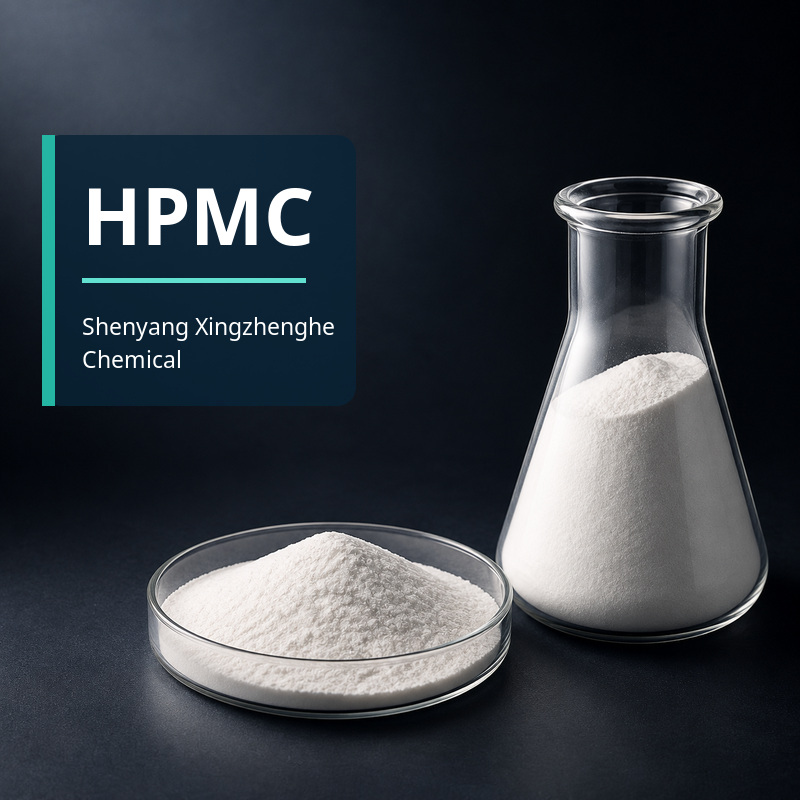
HPMC stands for Hydroxypropyl Methylcellulose, also commonly written as Hydroxypropyl Methyl Cellulose.
It is a nonionic cellulose ether produced by chemically modifying cellulose to introduce methoxy and hydroxypropoxy groups.
In construction materials, HPMC is generally used as a functional additive rather than as the main binder.
Depending on the formulation, it can influence properties such as:
water retention;
consistency;
workability;
sag resistance;
open time;
wet mortar stability;
application behavior.
Its exact effect depends on the formulation in which it is used.
HPMC can perform several functions simultaneously.
This is one reason it is widely used in dry-mix building materials.
HPMC can reduce the rate at which water leaves freshly mixed mortar.
This is important when mortar is applied onto absorbent substrates or under conditions where water could otherwise be lost rapidly.
HPMC increases the viscosity and consistency of aqueous construction formulations.
This helps influence the rheological behavior of fresh mortar.
The rheological effect of HPMC can influence mixing, spreading and application characteristics.
In vertical applications such as tile adhesives, the formulation needs sufficient stability to limit downward movement after application.
HPMC can contribute to the rheological control required for this purpose.
In suitable formulations, water retention and rheology can influence the usable working period after a material is spread.
However, open time is not controlled by HPMC alone.
The term construction grade HPMC generally refers to HPMC grades designed or selected for use in building-material formulations.
Typical applications include:
tile adhesive;
cement mortar;
dry-mix mortar;
wall putty;
skim coat;
gypsum plaster;
rendering mortar;
repair mortar;
other cement- or gypsum-based formulations.
Different applications may require different combinations of viscosity, water retention and rheological behavior.
Therefore, there is no single HPMC grade that is automatically suitable for every construction product.
Viscosity is one of the most commonly discussed specifications when selecting HPMC.
When dissolved under defined test conditions, HPMC increases the viscosity of the solution.
In a construction formulation, viscosity is related to the rheological behavior of the wet mix.
Depending on the system, changing HPMC viscosity may influence:
mortar consistency;
application feel;
sag resistance;
pumping behavior;
leveling;
wet stability.
However, an HPMC viscosity value is meaningful only when the test method and test conditions are known.
An HPMC product may be described as having a viscosity such as:
25,000 mPa·s;
50,000 mPa·s;
100,000 mPa·s;
150,000 mPa·s;
200,000 mPa·s.
These values are useful for grade classification, but they should not be compared without considering the measurement method.
Viscosity can vary according to:
solution concentration;
test temperature;
viscometer type;
spindle and speed;
preparation method.
Therefore:
100,000 mPa·s measured under one method should not automatically be treated as identical to 100,000 mPa·s reported under another method.
When comparing HPMC grades, always compare viscosity values measured under equivalent conditions.
No.
This is one of the most common misunderstandings in HPMC selection.
A higher-viscosity HPMC can provide stronger thickening under certain conditions, but that does not mean it will always produce a better construction material.
Excessive viscosity may make some formulations:
too heavy to spread;
difficult to mix;
less suitable for pumping;
unnecessarily sticky;
different from the desired application consistency.
The objective is therefore not to select the highest viscosity, but to select a viscosity range appropriate for the application.
A useful starting point is the final application.
Different formulations can have different rheological requirements.
For example:
| Application | Main HPMC Selection Considerations |
|---|---|
| Tile Adhesive | Water retention, workability, sag resistance, open time |
| Cement Mortar | Water retention, consistency, workability |
| Wall Putty | Smooth application, water retention, consistency |
| Gypsum Plaster | Water retention, workability, application behavior |
| Rendering Mortar | Water retention, consistency, application stability |
| Repair Mortar | Water retention, rheology, application requirements |
These are general considerations rather than fixed specifications.
The final HPMC viscosity should be determined through formulation testing.
Fresh mortar contains water required for:
mixing;
workability;
binder hydration;
application.
After the mortar is applied, water may be lost through:
absorption by the substrate;
evaporation;
contact with porous materials.
If water is lost too quickly, the fresh mortar may not retain the working characteristics required by the formulation.
HPMC helps control water migration and can increase the amount of water retained in the fresh mortar for a given period.
This is referred to as water retention.
Cement hydration requires water.
If freshly applied mortar loses water rapidly to an absorbent substrate or the surrounding environment, the hydration and application conditions can change.
Water retention can therefore be relevant to:
workable application time;
surface finishing;
cement hydration conditions;
consistency after application.
However, the relationship is not simply:
more water retention = better mortar.
The required level depends on the formulation, substrate and application conditions.
No.
Viscosity and water retention are related to HPMC performance, but they are not the same property.
Two HPMC grades with similar viscosity values can potentially show different water-retention behavior in a specific mortar system.
Water retention can also be influenced by:
HPMC dosage;
particle size;
formulation;
cement type;
aggregate grading;
water demand;
application temperature.
For this reason, HPMC should not be selected based on viscosity alone.
Tile adhesive is one of the common construction applications for HPMC.
A typical cement-based tile adhesive contains:
cement;
graded mineral fillers;
polymer additives where required;
cellulose ether;
other formulation components.
HPMC can contribute to several properties of the fresh tile adhesive.
Helps control water loss after the adhesive is applied.
Influences spreading and troweling behavior.
Helps control vertical movement of the fresh adhesive.
Can contribute to maintaining workable conditions after the adhesive has been spread.
The actual performance depends on the complete tile adhesive formulation.
There is no single viscosity value suitable for every tile adhesive.
The appropriate viscosity depends on factors such as:
cement content;
filler grading;
polymer powder content;
water demand;
tile type;
application thickness;
required sag resistance;
required open time;
local temperature.
A formulation designed for large-format tiles may have different rheological requirements from a basic thin-bed adhesive.
Therefore, viscosity should be treated as one part of the formulation design rather than a universal specification.
Dry-mix mortar is a broad category that can include:
masonry mortar;
rendering mortar;
plastering mortar;
repair mortar;
tile adhesive;
skim coat;
self-leveling related formulations;
other premixed construction materials.
Because these products have different application requirements, their HPMC requirements can also differ.
For example, a hand-applied rendering mortar and a machine-applied mortar may require different rheological behavior.
The HPMC grade should therefore be matched to the specific mortar system.
In cement-based mortar, HPMC can affect fresh-state properties through water retention and rheological modification.
The formulation response depends on:
cement chemistry;
cement fineness;
aggregate;
supplementary materials;
HPMC grade;
HPMC dosage;
other additives.
When changing cement source, it may therefore be necessary to re-evaluate the HPMC-containing formulation.
A formulation that performs as expected with one cement should not automatically be assumed to behave identically with another cement.
Wall putty requires suitable consistency for mixing, application and finishing.
HPMC may be used to influence:
water retention;
consistency;
application smoothness;
workability.
However, wall putty formulations differ considerably between markets.
Some are cement-based, while others use different binder systems.
The appropriate HPMC grade should therefore be selected according to the actual formulation rather than the product name "wall putty" alone.
Gypsum-based products have different chemistry from cement-based materials.
HPMC can be used in gypsum formulations to influence properties such as:
water retention;
consistency;
application behavior;
wet stability.
However, gypsum hydration and setting behavior differ from cement.
An HPMC grade used successfully in a cement mortar should therefore not automatically be assumed to be the preferred grade for a gypsum formulation.
Application testing remains important.
Workability is not a single measurable property.
In practical construction use, it may describe how easily a material can be:
mixed;
spread;
troweled;
pumped;
shaped;
finished.
HPMC modifies the aqueous phase and rheological behavior of a mortar.
This can change how the material feels during application.
However, workability is also affected by:
water content;
aggregate grading;
cement content;
polymer powder;
starch ether;
air content;
other additives.
Therefore, HPMC should be evaluated as part of the complete formulation.
Sag resistance is particularly important in vertical applications.
For example, after tile adhesive is applied to a wall, the formulation should have enough structural stability to limit unwanted tile or mortar movement.
HPMC contributes to the rheology of the fresh material and can therefore influence sag behavior.
However, sag resistance also depends on:
HPMC grade;
dosage;
water content;
filler grading;
other rheology modifiers.
This means increasing HPMC viscosity is not always the only or most appropriate way to adjust sag resistance.
Open time is particularly relevant to tile adhesive.
After the adhesive is spread onto the substrate, the installer needs sufficient time to place the tile while the adhesive remains suitable for bonding.
HPMC can influence this process through:
water retention;
surface drying behavior;
rheology.
But open time is also affected by:
temperature;
humidity;
substrate absorption;
cement;
polymer additives;
water dosage;
formulation design.
Therefore, an HPMC grade should not be described as providing a fixed open time independent of the formulation.
Yes.
Changing HPMC dosage can influence several fresh-mortar properties.
Depending on the formulation, increasing dosage may affect:
viscosity;
water retention;
consistency;
air entrainment;
application behavior.
However, more HPMC does not automatically mean better performance.
Excessive dosage may alter the formulation beyond the desired range and increase raw-material cost without providing a useful application benefit.
The appropriate dosage should therefore be established through testing.
There is no universal dosage that applies to every tile adhesive formulation.
Dosage depends on:
HPMC grade;
viscosity;
degree of modification;
cement content;
filler composition;
polymer powder;
water demand;
application requirements.
When evaluating dosage, it is useful to test several levels while keeping the other major formulation variables constant.
This allows the effect of HPMC dosage to be observed more clearly.
An HPMC product does not operate independently from the rest of the formulation.
Suppose the same HPMC grade is tested in two tile adhesives.
The formulations differ in:
cement source;
calcium carbonate grading;
polymer powder;
water-to-powder ratio.
The resulting mortar behavior may differ even though the HPMC is identical.
This does not necessarily indicate a change in HPMC quality.
It demonstrates why HPMC performance should be evaluated within the complete construction formulation.
Temperature can influence both the construction material and the behavior of cellulose ether systems.
Higher application temperatures can accelerate water evaporation.
This can increase the importance of water-management characteristics in a mortar.
Temperature may also influence the solution behavior of HPMC.
Therefore, formulations intended for hot climates may require different evaluation conditions from those used in cooler environments.
Laboratory testing should, where appropriate, consider representative application temperatures.
HPMC aqueous solutions can exhibit thermal gelation behavior.
As temperature increases to a certain range, changes in hydration and polymer interactions can lead to gelation.
The relevant temperature depends on the substitution characteristics and grade of HPMC.
Gel temperature is therefore another property that may be considered when comparing cellulose ether products.
However, its practical importance depends on the application and operating temperature.
Particle size can influence how quickly HPMC disperses and dissolves.
This can be relevant during:
dry blending;
water addition;
mortar mixing.
If cellulose ether forms lumps during mixing, uniform dispersion may be affected.
The appropriate particle-size distribution depends on product design and processing requirements.
Particle size should therefore be considered together with dissolution behavior rather than evaluated in isolation.
HPMC particles can hydrate at their surfaces when they contact water.
If particles are added improperly or agglomerate before adequate dispersion, hydrated outer layers can trap dry material inside, producing lumps.
In dry-mix construction materials, HPMC is normally dispersed throughout the dry powder before water is added.
This helps distribute the cellulose ether and reduce localized agglomeration.
Mixing procedure can therefore influence the apparent dissolution behavior.
Depending on the product and application, common parameters may include:
viscosity;
moisture;
ash content;
pH;
substitution characteristics;
gel temperature;
particle size;
appearance.
However, a specification sheet alone cannot fully predict construction performance.
For construction-grade HPMC, it is useful to combine raw-material specifications with application tests.
Ash content is one of the quality-control parameters used for cellulose ether products.
However, it should not be interpreted as a standalone indicator of construction performance.
A lower ash value does not automatically prove that an HPMC will provide better:
water retention;
open time;
workability;
sag resistance.
These properties should be evaluated through appropriate application testing.
A useful comparison should use the same formulation and test conditions.
For example:
| Trial | HPMC |
|---|---|
| Reference A | HPMC Grade A |
| Reference B | HPMC Grade B |
| Reference C | HPMC Grade C |
Keep constant:
cement;
fillers;
polymer powder;
other additives;
water dosage;
HPMC dosage;
mixing method.
Then compare relevant properties.
This makes it easier to identify differences attributable to the HPMC grade.
The appropriate tests depend on the final product.
For tile adhesive, possible evaluations include:
wet consistency;
water retention;
sag/slip;
open time;
wetting behavior;
application feel;
adhesion-related tests according to applicable standards.
For mortar or plaster, testing may include:
water retention;
consistency;
workability;
density;
air content;
setting behavior;
mechanical properties where relevant.
The applicable national or international standard should be selected according to the product and market.
No.
HPMC (Hydroxypropyl Methylcellulose) and HEMC (Hydroxyethyl Methylcellulose) are both nonionic cellulose ethers, but their chemical substitution structures differ.
This can influence properties such as:
thermal behavior;
water retention;
rheology;
application performance.
They are both used in construction materials, but one should not automatically be substituted for the other without formulation testing.
HPMC and CMC (Carboxymethyl Cellulose) are different types of cellulose ether.
One important difference is that HPMC is generally nonionic, whereas CMC contains ionic carboxymethyl groups.
This affects their behavior in different chemical environments.
For cementitious construction formulations, compatibility with high ionic strength and alkaline conditions is an important consideration.
Therefore, HPMC and CMC should not be treated as direct equivalents simply because both are cellulose derivatives.
Yes, HPMC and redispersible polymer powder (RDP) are commonly encountered together in various dry-mix construction formulations.
However, they perform different functions.
HPMC mainly contributes to properties such as:
water retention;
rheology;
workability.
RDP can influence properties associated with the polymer phase after redispersion and drying.
The interaction between the two should be evaluated in the complete formulation.
Some dry-mix formulations use both cellulose ether and starch ether.
They are not the same material and should not be treated as direct replacements.
Starch ether may be used to modify particular rheological characteristics, while HPMC provides a broader combination of water retention and rheological effects.
The required combination depends on the formulation.
If a formulation becomes excessively thick after adding HPMC, possible factors include:
HPMC viscosity is too high for the formulation;
HPMC dosage is excessive;
water dosage is too low;
another thickening additive is present;
filler grading has changed.
The correct response is not necessarily to replace HPMC immediately.
The complete formulation should first be reviewed.
Possible factors can include:
insufficient rheological structure;
excessive water;
inappropriate HPMC grade;
insufficient cellulose ether dosage;
filler grading;
interaction with other additives.
The formulation should be adjusted systematically.
Changing several variables simultaneously makes it difficult to identify the cause.
Rapid loss of workable water may be related to:
absorbent substrate;
high temperature;
low humidity;
wind;
insufficient water retention;
formulation conditions.
HPMC grade and dosage can be part of the evaluation, but environmental and substrate conditions should also be considered.
This situation can occur because viscosity is only one product parameter.
Two products with similar viscosity may differ in:
water retention behavior;
substitution characteristics;
particle size;
modification;
dissolution behavior;
interaction with the formulation.
This is why a construction-grade HPMC should ideally be evaluated through both laboratory specification testing and application testing.
A practical selection process can be organized as follows.
Is the HPMC intended for:
tile adhesive;
mortar;
wall putty;
gypsum;
another dry-mix product?
Determine whether the formulation needs adjustment in:
water retention;
viscosity;
sag resistance;
workability;
open time;
other fresh-state properties.
Choose a candidate viscosity range based on the application and existing formulation.
Check viscosity test conditions and other relevant specifications.
Test candidate HPMC grades under identical conditions.
Evaluate several dosage levels rather than assuming one universal value.
Consider temperature, substrate and application method.
Evaluate the finished construction product according to the relevant standards and performance requirements.
HPMC stands for Hydroxypropyl Methylcellulose.
HPMC is used in products such as tile adhesives, cement mortars, wall putty and gypsum-based materials to modify water retention, rheology and application behavior.
Construction grade HPMC refers to HPMC grades selected or designed for use in construction formulations.
There is no single viscosity suitable for every tile adhesive. Selection depends on formulation composition, water demand, required workability, sag resistance and other application requirements.
No. Higher viscosity does not automatically mean better construction performance.
HPMC can increase water retention in suitable cement- and gypsum-based formulations. The actual result depends on grade, dosage and formulation conditions.
Increasing dosage can influence water retention, but more HPMC is not automatically better. The appropriate dosage should be determined experimentally.
Yes. HPMC is used in various wall putty formulations to influence water retention, consistency and application behavior.
Yes. HPMC can be used in gypsum-based products to modify water retention and fresh-state properties.
No. They are different cellulose ethers with different substitution structures.
No. HPMC and CMC have different chemical structures and ionic characteristics.
Yes. HPMC and redispersible polymer powder can be used together in various dry-mix formulations, but they perform different functions.
Hydroxypropyl Methylcellulose (HPMC) is an important functional additive in many construction materials, including tile adhesives, cement mortars, wall putty, gypsum plaster and other dry-mix formulations.
However, selecting construction-grade HPMC should not be reduced to one question:
“What is the highest HPMC viscosity available?”
A more useful approach is to consider:
application;
viscosity and its test method;
water retention;
HPMC dosage;
rheological requirements;
cement or gypsum system;
other additives;
application temperature;
substrate conditions.
For example, an HPMC grade suitable for one tile adhesive formulation may not provide the same behavior in another formulation with a different cement, filler grading, polymer powder or water demand.
Similarly, a high-viscosity HPMC is not automatically more suitable than a medium-viscosity grade.
The objective should be to select an HPMC grade that provides an appropriate balance of water retention, consistency, workability and application behavior for the specific construction material.
For practical formulation development, a useful method is:
define the application → select candidate HPMC grades → compare them under identical conditions → optimize dosage → evaluate the finished formulation.
This approach provides a more reliable basis for HPMC selection than relying on viscosity alone.
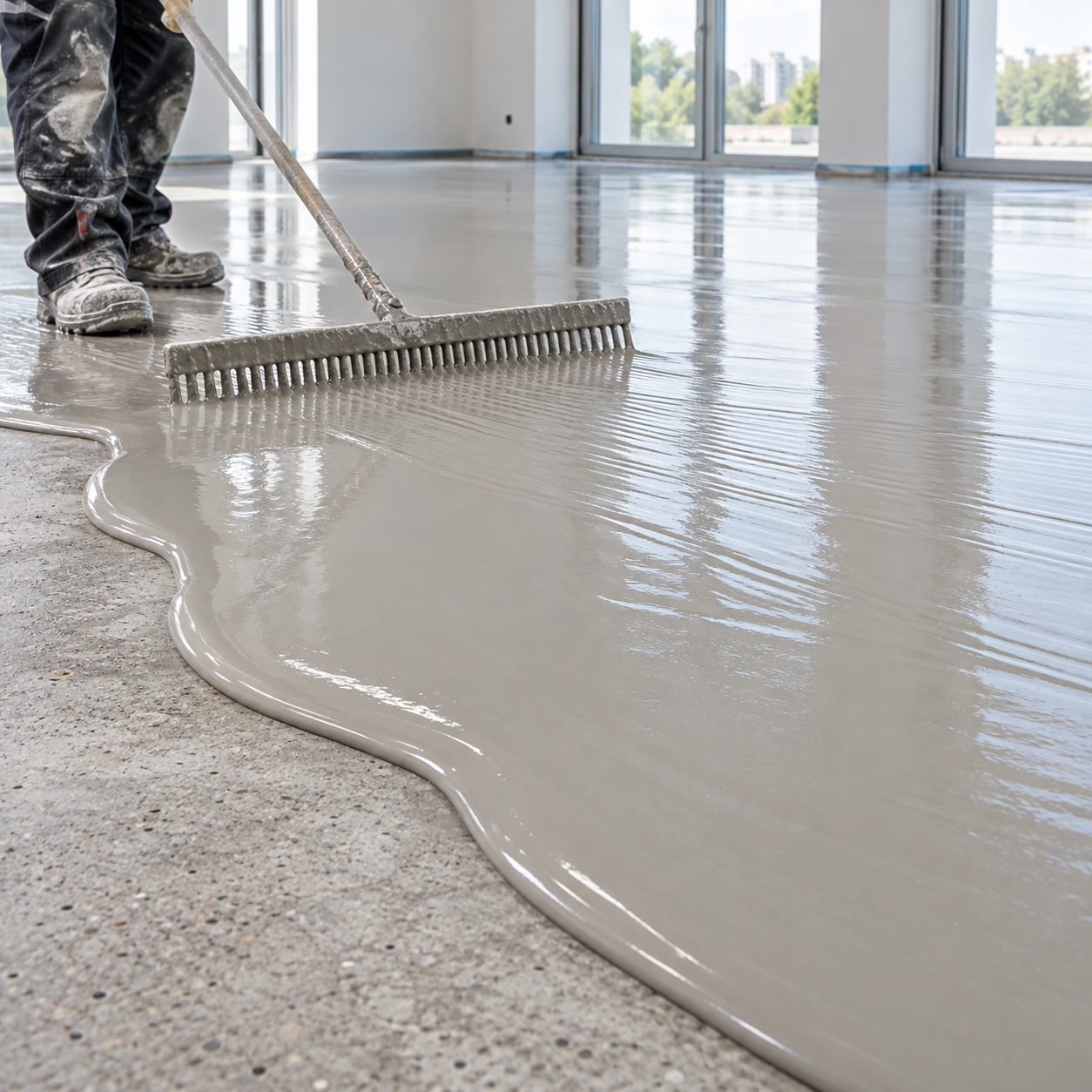 HPMC in Self-Leveling Mortar: Evaluating Flow, Stability and Surface Quality
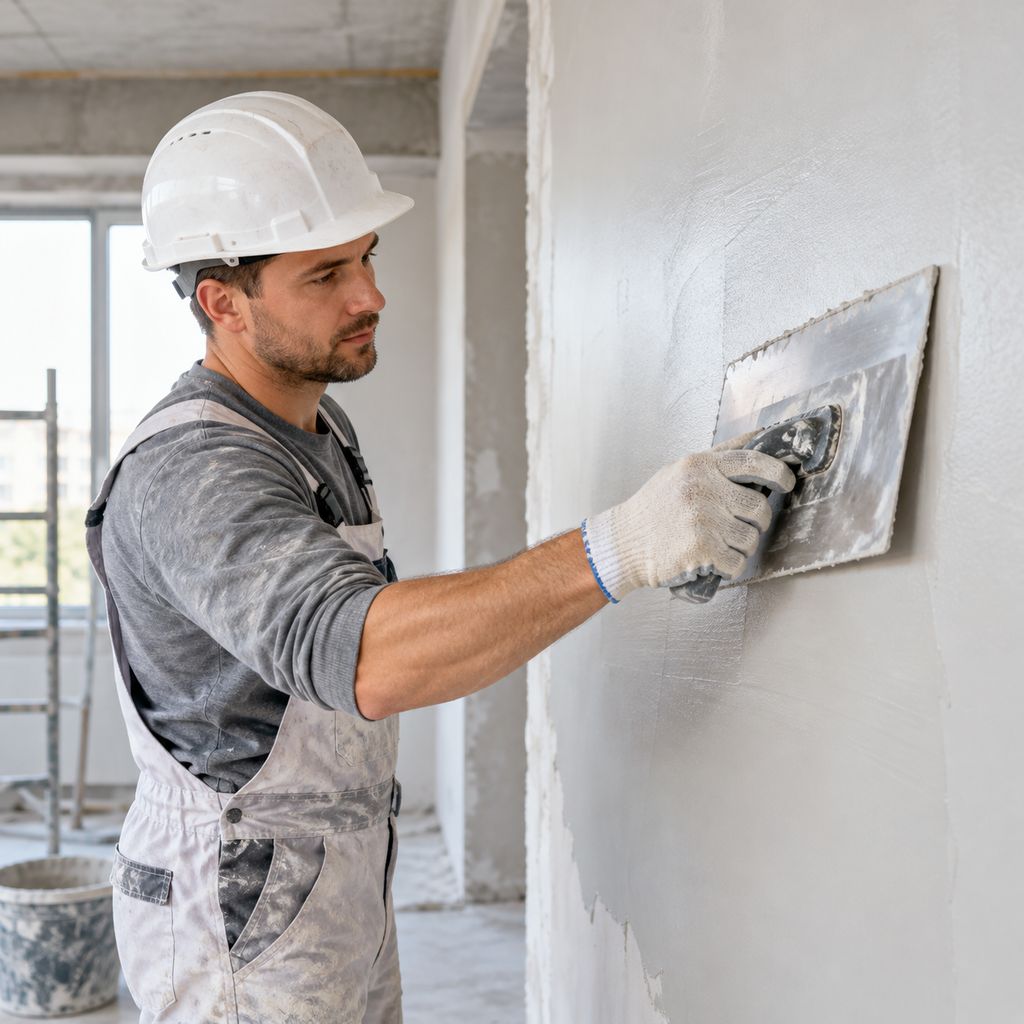 HPMC in Gypsum Plaster: How It Affects Workability, Water Retention and Surface Finish
 Why Does HPMC-Modified Mortar Contain Too Much Air? Causes, Testing and Formulation Troubleshooting
 How to Evaluate HPMC Quality Beyond Viscosity? Key Parameters for Construction Grade HPMC Selection

