
In the modern dry-mix mortar industry, achieving the right balance of workability and water management is essential for successful application. Raw materials must ensure that mixtures remain workable during application and retain enough moisture to cure correctly.
Hydroxypropyl Methylcellulose (HPMC) is a non-ionic cellulose ether derived from natural polymer materials. It is widely used as a multi-functional additive in construction chemical formulations, serving primarily as a water retention agent, thickener, and binder to improve product performance on the job site.
HPMC modifies the physical behavior of wet mortar mixtures through three primary mechanisms:
High Water Retention:The most critical role of HPMC is preventing moisture from escaping into porous substrates (like bricks or concrete blocks) or evaporating too quickly into the air. By keeping water inside the wet mix, HPMC ensures that cement or gypsum has sufficient time to undergo complete hydration. This directly prevents cracking, powdering, and strength loss in thin-layer applications.
Thickening and Anti-Sagging Properties:HPMC dissolves in water to form a stable, viscous network. This thickening effect increases the internal cohesion of the mortar. For vertical applications like tile adhesives or wall putties, this structural stability prevents heavy tiles from slipping and stops wet mortar from sagging or slumping down the wall.
Improved Workability and Open Time:Formulations containing HPMC exhibit pseudoplastic (shear-thinning) behavior. This means the mortar becomes easier to spread under the trowel, reducing physical effort for workers. Additionally, by regulating water loss, HPMC extends the "open time," giving installers more flexibility to adjust tiles or smooth out surfaces before the material sets.
Because HPMC can be adjusted for different viscosity levels, it is utilized across a variety of dry-mix products:
In tile adhesive formulations, high water retention and anti-sagging performance are critical. HPMC allows installers to apply thin beds of mortar, slide tiles into place, and achieve strong initial adhesion without worrying about premature drying or sliding.
For internal and external wall smoothing, HPMC ensures excellent troweling properties. It helps create a smooth, uniform layer, reduces air bubble formation, and provides sufficient moisture retention to prevent the putty from chalking or shrinking during drying.
In cement- or gypsum-based wall plastering, adding HPMC helps maintain the consistency of large batches. It improves machine-pumping efficiency for spray-applied plasters and prevents water separation (bleeding) during transport and application.
In floor self-leveling systems, low-viscosity HPMC is used to manage water separation and sedimentation. It helps maintain flowability while preventing sand and heavy aggregates from sinking to the bottom, ensuring a flat, durable floor surface.
Technical buyers and formulation engineers select specific HPMC grades based on three standard parameters:
Viscosity Range: HPMC is classified by its viscosity, measured in milli-Pascal-seconds (mPa·s) or centipoise (cP). Lower viscosities (e.g., 400 to 4,000 mPa·s) are common in self-leveling compounds, mid-viscosities are used in putties, while high viscosities (e.g., 40,000 to 200,000 mPa·s) are standard for tile adhesives and thick plasters.
Thermal Gelation Temperature: This is the temperature at which the HPMC solution turns into a gel. Higher gelation temperatures (typically above 65°C) ensure that the product maintains its water retention capabilities even during hot summer construction conditions.
Dissolution Behavior (Instant vs. Delayed): Cold-water-dispersible (delayed-solubility) grades are surface-treated to mix into water without clumping, making them ideal for liquid applications. Standard grades are intended for dry-mixing with cement and sand before water is added.
We focus on delivering stable cellulose ethers to support predictable manufacturing and mixing outcomes:
Automated Production and Strict Testing:Our construction-grade HPMC is manufactured under automated process controls to ensure uniform substitution of hydroxypropyl and methoxyl groups. This results in consistent viscosity and reliable water retention from batch to batch, minimizing the need for formula changes in your production plant.
Optimized Particle Size for Dry Blending:The particle size distribution of our powder is controlled to ensure rapid, uniform dispersion within dry-mix systems. This prevents the formation of unhydrated gel lumps (often called "fish eyes") when the dry mortar is mixed with water on-site.
Standardized Industrial Packaging:HPMC is a hydroscopic material that naturally absorbs moisture from the air. We package our products in multi-layer paper-plastic composite bags with high-barrier inner linings to protect the powder from moisture, caking, and contamination during long-distance shipping and warehouse storage.
Q1: How does ambient temperature affect the performance of HPMC in mortar?
A: High temperatures during summer can reduce the water retention efficiency of standard cellulose ethers. As the temperature rises, the thermal properties of HPMC can cause its retention capabilities to drop, leading to faster drying and cracking. Our construction-grade HPMC features optimized gelation points to ensure stable performance and sufficient open time even in warm climates.
Q2: Is a higher viscosity HPMC always better for dry-mix mortar?
A: Not necessarily. While higher viscosity improves anti-sagging performance and cohesion, overdoing it can increase internal friction, making the mortar sticky and difficult to trowel. It can also increase water demand unnecessarily. The ideal approach is choosing a viscosity grade matched to the application—such as a balanced mid-to-high grade for putties and a specific high-viscosity grade for large tile installation.
Q3: What is the difference between HPMC and MHEC (Methyl Hydroxyethyl Cellulose)?
A: Both are common cellulose ethers used in construction. MHEC generally offers higher thermal stability, making it popular in extremely hot climates. However, HPMC provides excellent overall versatility, anti-slip properties, and cost efficiency for a wide range of standard tile adhesives, wall putties, and plaster applications globally.
Consistent raw materials are the foundation of reliable dry-mix mortar products. Selecting the proper grade of HPMC ensures that your final formulations deliver the required water retention, sag resistance, and workability on the job site.
We supply standard industrial-grade Hydroxypropyl Methylcellulose (HPMC) tailored for construction chemical producers and dry-mix plants. For comprehensive Technical Data Sheets (TDS), Safety Data Sheets (SDS), or to arrange for product samples for laboratory evaluation, please contact our team.
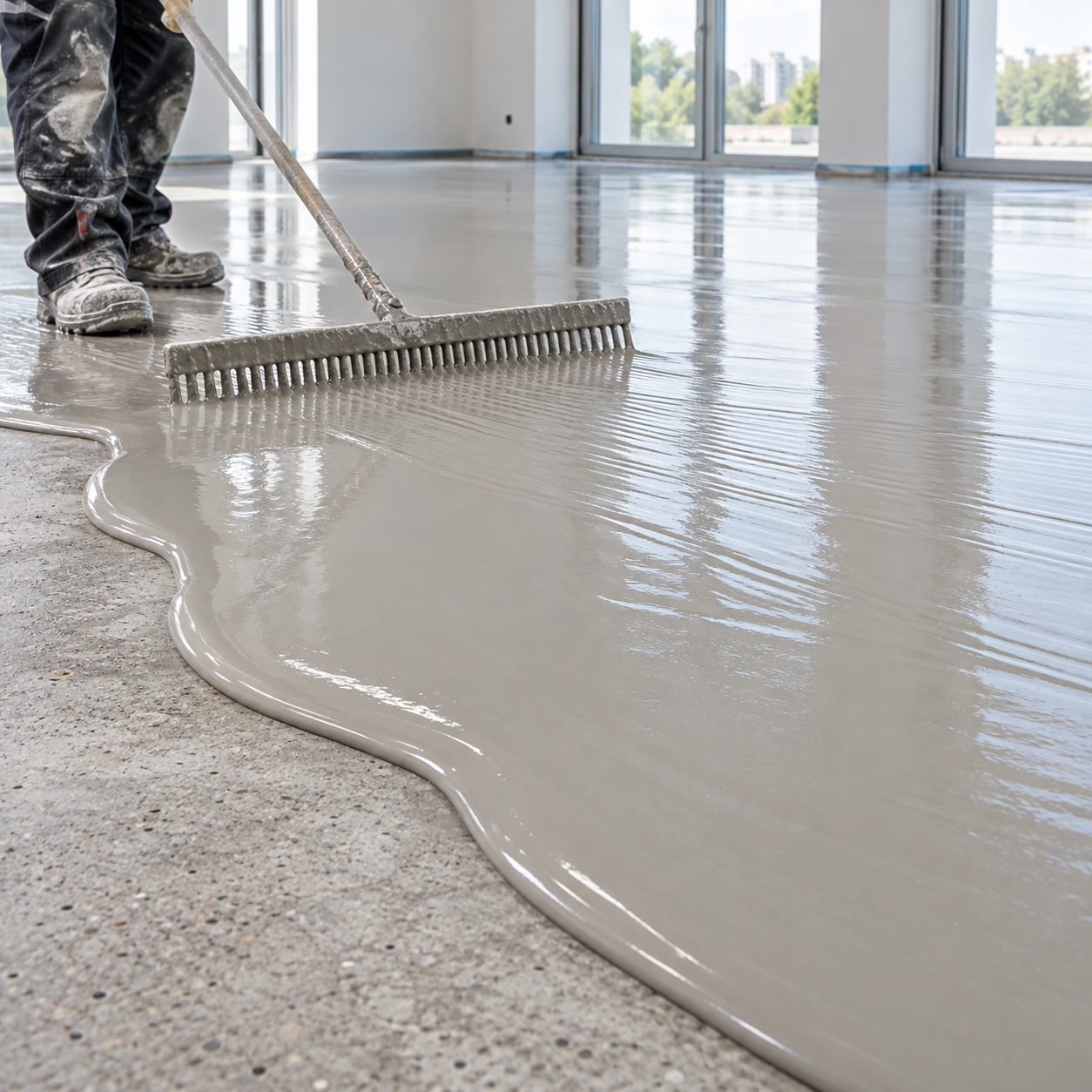 HPMC in Self-Leveling Mortar: Evaluating Flow, Stability and Surface Quality
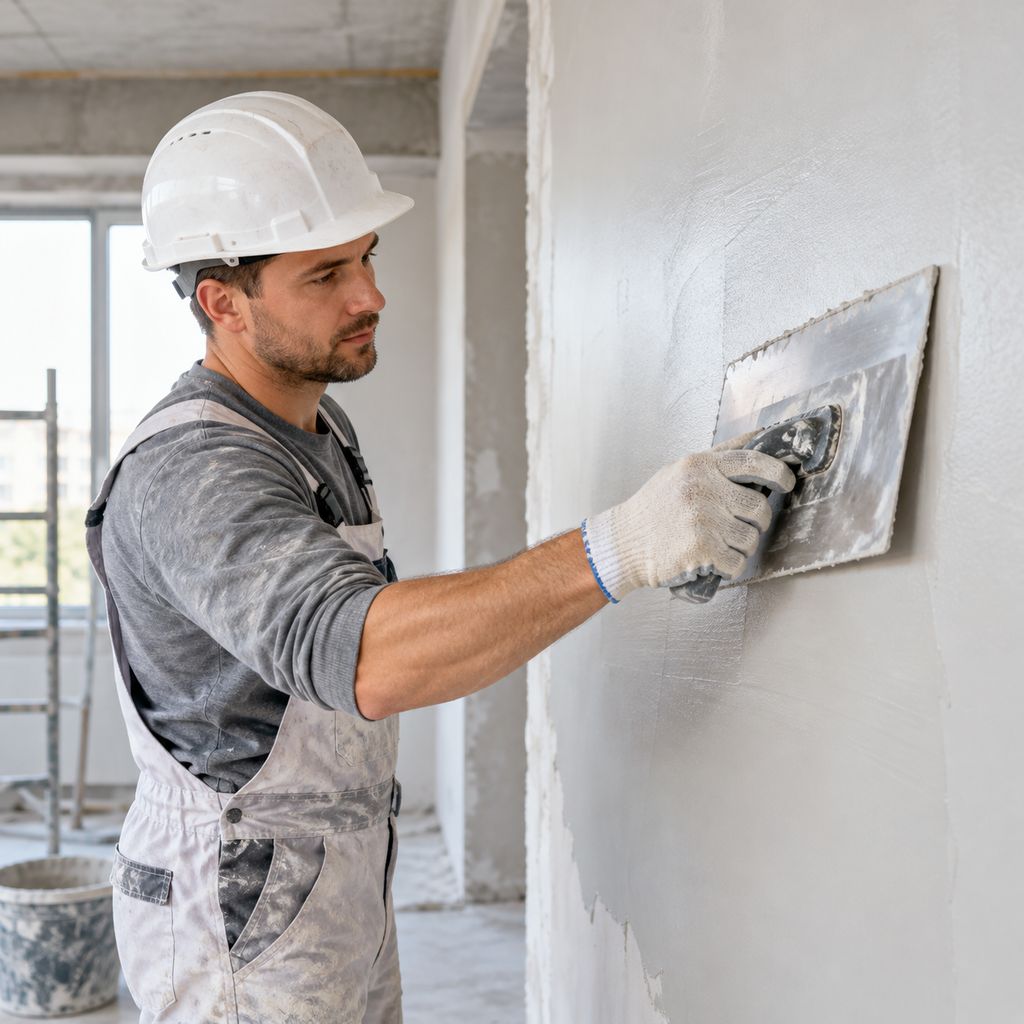 HPMC in Gypsum Plaster: How It Affects Workability, Water Retention and Surface Finish
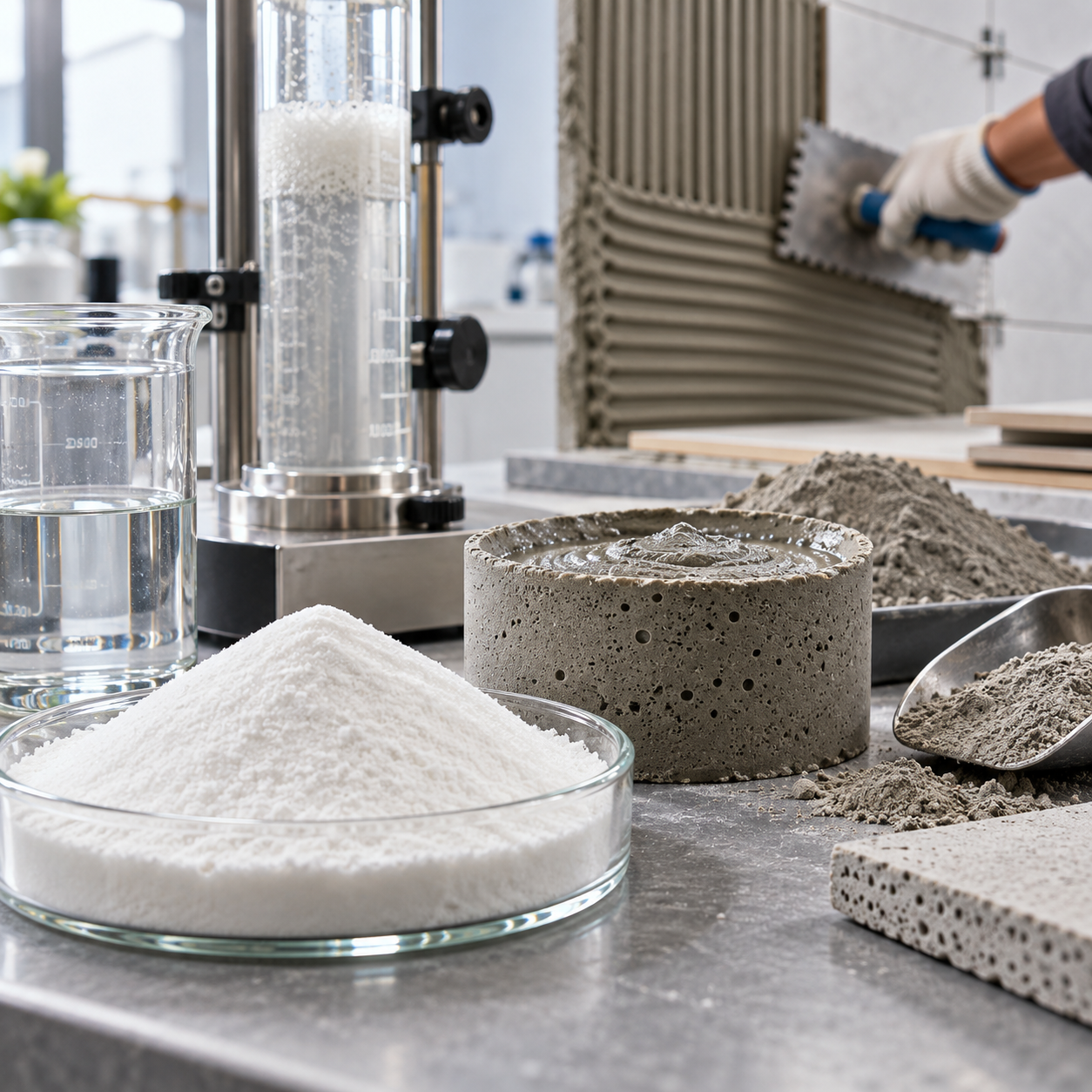 Why Does HPMC-Modified Mortar Contain Too Much Air? Causes, Testing and Formulation Troubleshooting
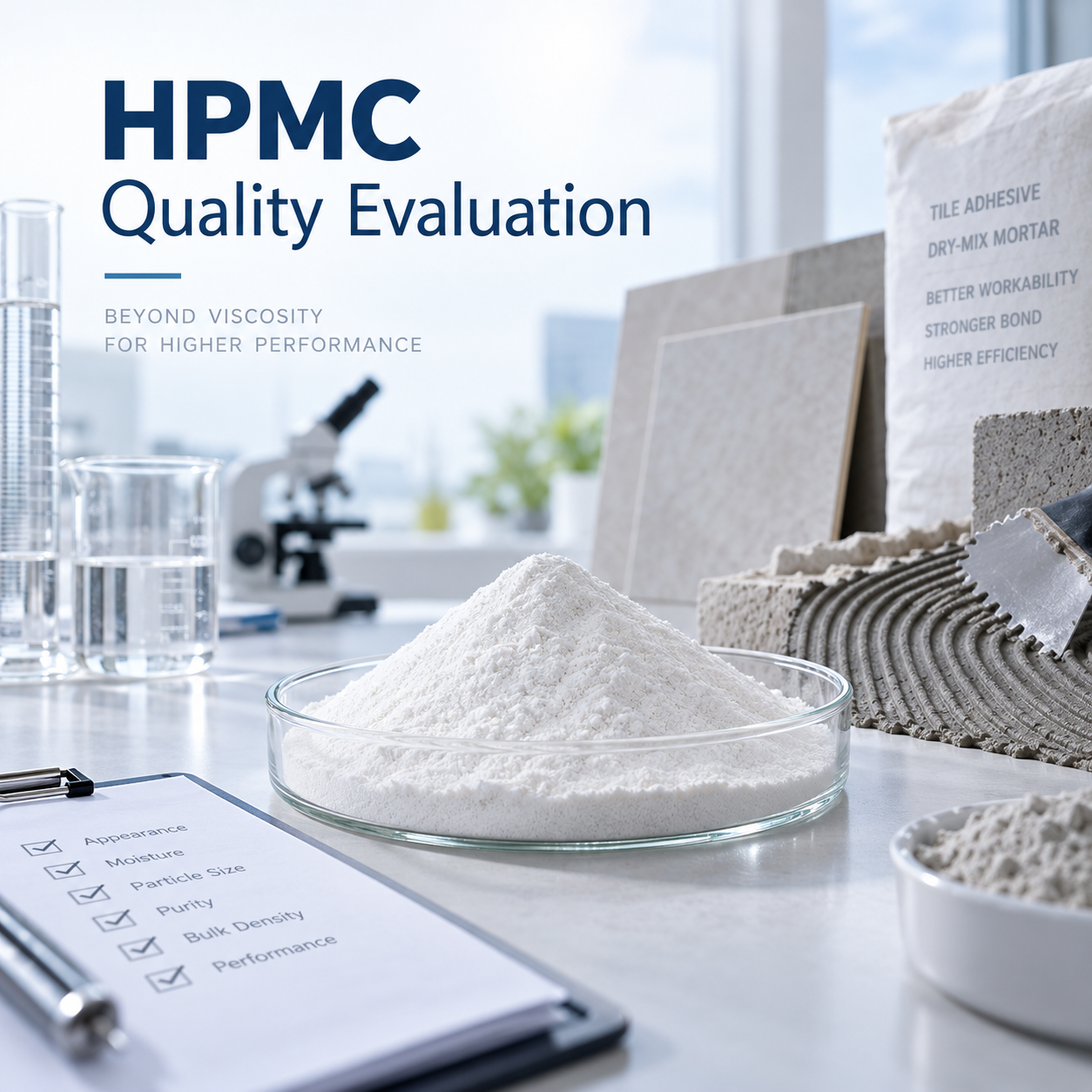 How to Evaluate HPMC Quality Beyond Viscosity? Key Parameters for Construction Grade HPMC Selection

