

Open time is an important application property of cement-based tile adhesive.
After the adhesive is spread onto the substrate with a notched trowel, the installer needs sufficient time to place the tiles while the adhesive surface remains suitable for bonding.
In practice, however, some tile adhesive formulations may lose their workable bonding window relatively quickly.
The surface may begin to dry, form a skin or show reduced wetting of the tile before installation is completed.
When this happens, HPMC is often the first raw material to be questioned.
But short open time is not necessarily caused by HPMC alone.
The result can also be influenced by:
Ambient temperature
Relative humidity
Wind or air movement
Substrate absorption
Cement characteristics
Sand and filler composition
Water demand
HPMC dosage and grade
Other additives
Mixing and application conditions
Therefore, troubleshooting short open time requires looking at the complete tile adhesive system.
Open time generally refers to the period after the adhesive has been applied to the substrate during which tiles can still be installed with the required bonding performance under the applicable test or application conditions.
It should not be confused with several other time-related properties.
For example:
Pot life concerns how long the mixed adhesive remains usable in the mixing container.
Open time concerns the adhesive after it has already been spread onto the substrate.
Adjustability time concerns the period during which the position of an installed tile can still be adjusted under the relevant conditions.
These properties are related to the behavior of the mortar, but they are not interchangeable.
A tile adhesive may remain workable in the bucket while the thin layer already spread on a wall loses its suitable surface condition much faster.
Tile adhesive behaves differently after application because it is spread into a relatively thin layer.
At this stage, water can be lost through several routes.
Water may be:
Absorbed by the substrate
Lost from the exposed surface
Consumed during cement hydration
Redistributed within the mortar
Environmental conditions can accelerate some of these processes.
As water leaves the surface region, the adhesive may gradually lose its ability to wet the back of the tile effectively.
This is one reason why open time needs to be considered separately from the apparent consistency of mortar remaining in the bucket.
Hydroxypropyl methylcellulose is commonly used in cement-based tile adhesive formulations.
Depending on the formulation and HPMC grade, it can contribute to properties such as:
Water retention
Thickening
Workability
Consistency
Application behavior
Water retention is particularly relevant when discussing open time.
By influencing water movement within the mortar, HPMC can help the applied adhesive maintain an appropriate working condition for a certain period.
However, the final result depends on the whole formulation.
Adding HPMC does not mean that open time can be predicted from HPMC viscosity alone.
Not necessarily.
This is an important distinction when selecting HPMC for tile adhesive.
A product described as:
200,000 mPa·s
should not automatically be assumed to provide longer open time than a product described as:
100,000 mPa·s
in every formulation.
Viscosity is one specification parameter.
Tile adhesive behavior can also depend on:
HPMC chemistry and grade
Water-retention characteristics
Dosage
Cement
Aggregate and filler
Polymer powder
Other additives
Water content
Environmental conditions
For this reason, changing from a lower-viscosity HPMC to a higher-viscosity grade is not a universal solution to short open time.
If the amount of HPMC in the formulation is changed, mortar rheology and water-retention behavior may also change.
However, there is no universal HPMC dosage that is suitable for every tile adhesive.
The appropriate addition level depends on the complete formulation and required application properties.
When evaluating HPMC dosage, a controlled gradient can be useful:
Reference Formula → Lower Level → Medium Level → Higher Level
Other raw materials should remain unchanged during the initial comparison.
This makes it easier to determine whether the observed change is actually associated with HPMC dosage.
Temperature can have a substantial influence on the behavior of freshly applied mortar.
Under hotter conditions, water loss from the exposed surface may occur more rapidly.
Cement hydration behavior and the overall development of the mortar can also differ from cooler laboratory conditions.
This is why a tile adhesive that performs acceptably in a controlled laboratory environment may behave differently on a construction site during hot weather.
When a customer reports:
“The same tile adhesive worked before, but now the open time is much shorter.”
one of the first questions should be:
Did the environmental temperature change?
Seasonal variation should be included in the troubleshooting process.
Temperature is not the only environmental factor.
Dry air can contribute to faster moisture loss from the exposed adhesive surface.
Therefore, two jobsites at the same temperature may still show different application behavior if relative humidity differs significantly.
Laboratory comparisons should record environmental conditions where they are relevant to the test.
This is particularly useful when trying to reproduce a jobsite complaint.
Air movement across freshly applied tile adhesive can accelerate surface drying.
This may occur:
Outdoors
Near open doors or windows
In unfinished buildings
In areas with strong ventilation
Under certain mechanical ventilation conditions
If the problem occurs only in a particular area of a construction site, air movement should be investigated along with temperature and humidity.
Changing the HPMC without checking the application environment may not identify the actual cause.
A highly absorbent substrate can draw water from the tile adhesive after application.
The rate depends on the substrate material and its condition.
Potentially relevant factors include:
Substrate porosity
Surface dryness
Surface temperature
Surface preparation
Existing coatings or treatments
If laboratory testing is carried out on one type of substrate while the construction site uses another, the observed open time may differ.
Therefore, substrate conditions should be recorded when investigating application complaints.
Consider the same bag of tile adhesive applied to two different substrates.
One substrate has relatively low absorption.
The other is dry and highly absorbent.
The adhesive on the second substrate may lose water more rapidly.
As a result, the installer may perceive a shorter working window even though the dry-mix formulation itself has not changed.
This demonstrates why application performance cannot always be diagnosed by testing the powder formulation alone.
Cement is another major variable.
Different cement batches or sources may differ in characteristics that influence:
Water demand
Hydration behavior
Interaction with additives
Fresh mortar consistency
Setting behavior
If a tile adhesive manufacturer changes cement supplier and then observes a change in open time, it would be inappropriate to assume immediately that HPMC is responsible.
A useful comparison would keep the HPMC unchanged while testing the previous and new cement under controlled conditions.
Aggregate characteristics influence the rheology and water demand of dry-mix mortar.
Relevant factors may include:
Particle-size distribution
Fine-particle content
Moisture
Mineral composition
Filler level
If the sand grading changes, the amount of water required to achieve a similar application consistency may also change.
This can affect the complete behavior of the adhesive.
Therefore, when a previously stable formulation suddenly changes, raw-material variation should be checked systematically.
The amount of mixing water influences fresh mortar consistency and application behavior.
Too little water may make the mortar difficult to spread and can change surface wetting behavior.
Excessive water may also alter consistency and other application characteristics.
The appropriate water addition should therefore be established for the specific formulation rather than adjusted randomly at the jobsite.
When comparing HPMC samples, use the same controlled mixing procedure and clearly record the water addition.
Redispersible polymer powder is another commonly used component in many tile adhesive formulations.
HPMC and RDP perform different functions.
HPMC is generally associated with properties including water retention, thickening and rheological control.
RDP contributes polymer modification to the hardened and fresh mortar system depending on the formulation and polymer grade.
Because these materials interact within the same mortar, changing RDP type or dosage may also alter the overall application behavior.
Therefore, when evaluating a new HPMC sample, it is useful to keep the RDP unchanged during the first comparison.
Tile adhesive formulations can contain additional components used to adjust specific properties.
For example, starch ether may be used in some formulations to influence rheological behavior.
Other additives may also be present depending on the product design.
If several additives are changed at the same time, troubleshooting becomes difficult.
A better experimental approach is:
Change one important variable → Test → Record the result → Proceed to the next variable
This is particularly important when reformulating an existing commercial dry-mix product.
When open time becomes shorter than expected, a structured troubleshooting sequence can help.
First, check whether the environmental conditions have changed:
Temperature
Humidity
Air movement
Then check the substrate:
Is it more absorbent?
Is it unusually dry?
Has the substrate material changed?
Next, review the dry-mix raw materials:
Cement
Sand
Filler
HPMC
RDP
Other additives
Finally, check production and application conditions:
Mixing water
Mixing time
Resting time
Application thickness
Trowel method
This approach is more reliable than immediately increasing the HPMC dosage.
When comparing two HPMC suppliers, the test should be controlled.
For example:
Formula A: Existing HPMC
Formula B: New HPMC Sample 1
Formula C: New HPMC Sample 2
Keep the following unchanged as far as practical:
Cement batch
Sand
Filler
RDP
Other additives
HPMC dosage
Water
Mixing procedure
Test temperature
Substrate
Application method
This helps isolate the effect of changing the HPMC sample.
Two HPMC products may both be sold as:
100,000 mPa·s
yet behave differently in a tile adhesive formulation.
The reason is that nominal viscosity alone does not describe every application characteristic.
When comparing samples, buyers can consider:
Viscosity and test conditions
Moisture
Ash or other agreed quality parameters
Dissolution/dispersing behavior
Water-retention behavior
Mortar consistency
Application test results
Batch consistency
The exact testing program should reflect the intended application.
Laboratory testing is useful because variables can be controlled.
However, actual construction sites introduce conditions that may be difficult to reproduce completely, including:
Temperature variation
Wind
Different substrates
Different mixing equipment
Different installers
Variable water addition
A practical evaluation may therefore use laboratory testing for initial comparison and suitable application trials for further verification.
Neither type of test should be interpreted without considering its conditions.
If HPMC is being selected for tile adhesive, providing application information can make sample selection more targeted.
Useful information includes:
Application: Cement-based tile adhesive
Current HPMC Viscosity Grade: If available
HPMC Dosage: Current formulation level
Main Requirement: Open time, water retention, consistency, sag control or other property
Cement Type: Where relevant
Current Problem: For example, short open time in hot weather
Required Sample Quantity
Expected Commercial Quantity
Packaging Requirement
Destination
For supplier replacement projects, information about the currently used HPMC specification can also be useful for comparative testing.
HPMC can influence water retention and fresh mortar behavior, which are relevant to open time. The actual result depends on the HPMC grade, dosage, complete formulation and application conditions.
Not necessarily. Viscosity is only one parameter. Water retention, product characteristics, dosage, cement, temperature, substrate and other formulation variables also need to be considered.
Higher temperature, dry conditions and air movement can increase moisture loss from freshly applied adhesive. Cement and additive behavior can also vary with temperature.
It may change mortar behavior, but it is not a universal solution. The cause of short open time should first be identified, and dosage changes should be verified through controlled testing.
Different substrates can have different water absorption characteristics. A dry, porous substrate may remove water from the adhesive faster than a less absorbent substrate.
Not automatically. Similar nominal viscosity does not guarantee identical behavior in a specific mortar formulation. Comparative application testing is recommended when changing HPMC grades or suppliers.
For an initial HPMC comparison, it is generally more useful to keep RDP and other major formulation components unchanged. This makes it easier to identify differences associated with the HPMC sample.
When tile adhesive open time becomes too short, HPMC is an important factor to investigate, but it should not automatically be treated as the only cause.
A more useful troubleshooting approach considers:
HPMC + Cement + Sand and Filler + RDP and Other Additives + Water + Substrate + Environment
For HPMC supplier comparison, controlled formulation testing is particularly important. Keeping the other variables unchanged allows different HPMC samples to be evaluated under comparable conditions.
Shenyang Xingzhenghe Chemical Co., Ltd. supplies HPMC grades for applicable dry-mix mortar applications, including cement-based tile adhesive. Product specifications, batch documentation, packaging information and samples can be provided according to purchasing requirements.
Actual application results should be verified according to the customer's formulation, raw materials, testing method and construction conditions.
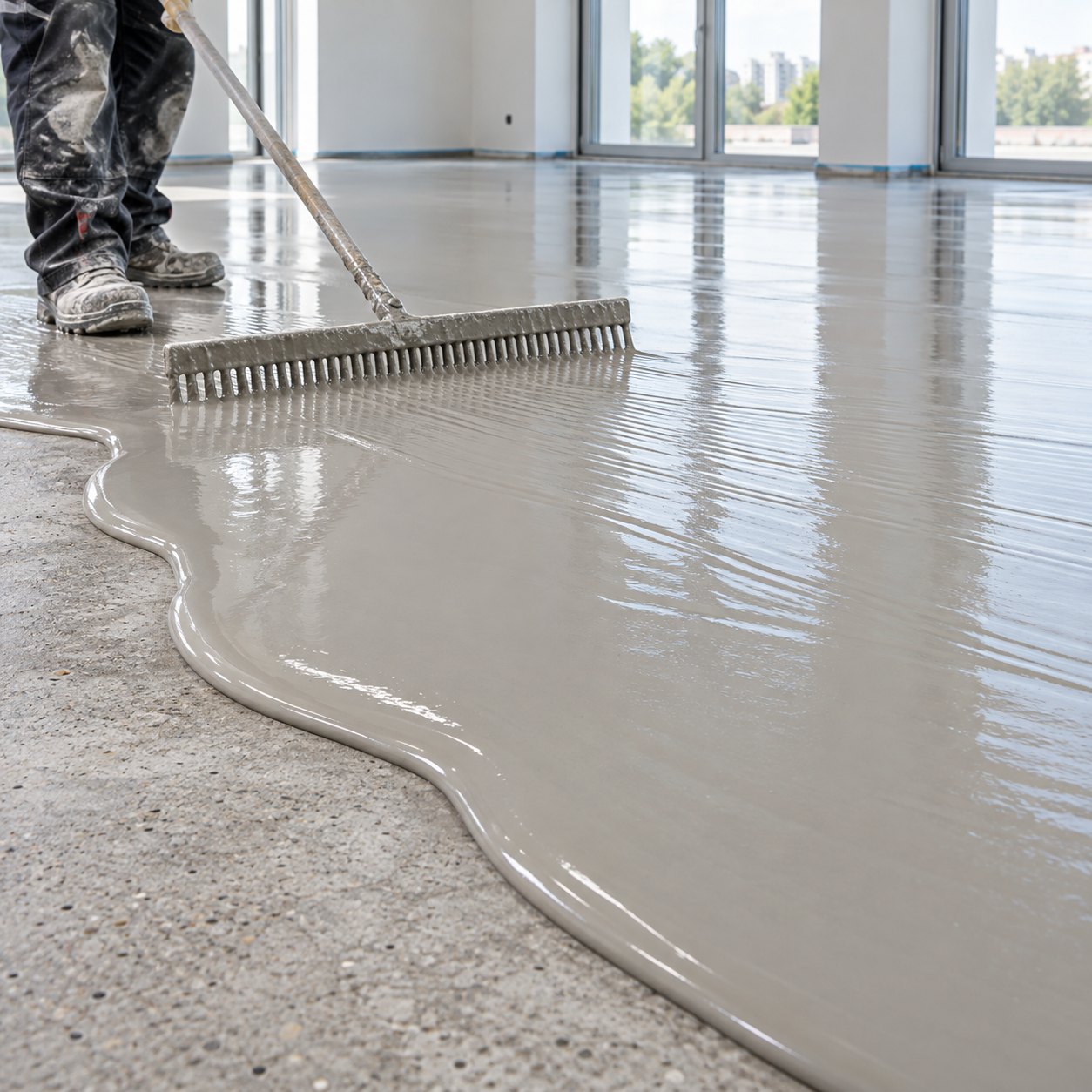 HPMC in Self-Leveling Mortar: Evaluating Flow, Stability and Surface Quality
 HPMC in Gypsum Plaster: How It Affects Workability, Water Retention and Surface Finish
 Why Does HPMC-Modified Mortar Contain Too Much Air? Causes, Testing and Formulation Troubleshooting
 How to Evaluate HPMC Quality Beyond Viscosity? Key Parameters for Construction Grade HPMC Selection
